.jpg)
TL;DR
Many family offices search for Advent Axys competitors when reporting workflows, private asset tracking, or multi-entity visibility become difficult to manage across their broader investment management environment. SS&C Advent products have long supported portfolio accounting and reporting across asset and wealth management firms. In this article, the focus is on Axys specifically as a portfolio accounting and reporting system, rather than the broader advisor technology stack. In 2026, the most common alternatives to Advent Axys typically fall into three categories: portfolio accounting systems, reporting platforms, and modern family office operating platforms
How Advent Axys Fits Into the Investment Management Technology Landscape
Advent Axys is an established portfolio accounting and reporting product within the SS&C Advent suite, used in wealth and investment management environments. These systems helped firms track positions, calculate performance, and support operational reporting across portfolios and managed accounts.
Over time, Advent software products gained serious market share across the investment management and wealth management industry, particularly among broker-dealers, investment managers, and firms operating within the enterprise space.
Some platforms in this market were originally designed for larger institutional or advisory environments, while others were developed with family office use cases in mind.
As the market has evolved, many firms now operate with multiple systems alongside their core portfolio accounting platform, particularly for reporting, private assets, and operational workflows.
For family offices, the technology landscape often looks different. Rather than operating a traditional wealth management firm’s stack, family offices frequently consolidate information across custodians, administrators, private investment records, and documents. Many teams, therefore, rely on a combination of reporting tools, spreadsheets and manual processes, with some offices also maintaining custom internal tooling to manage reporting, data coordination, and operational workflows.
As a result, when family offices evaluate Advent Axys competitors, the conversation often extends beyond replacing a single portfolio accounting tool. Instead, they are assessing how modern portfolio management solutions or family office platforms can provide consolidated visibility across investments, entities, and reporting workflows.
What Axys Covers Today and Why Some SFOs Explore Alternatives
Before evaluating Advent Axys' competitors, it helps to clarify what Axys is designed to do within a technology stack.
Axys is positioned primarily as a portfolio accounting and reporting system used across wealth and investment management. In practical terms, it functions as an investment accounting record for portfolios. The system tracks positions, transactions, cost basis, and performance metrics, and it supports the reporting processes that depend on those records.
For many organizations, this investment accounting role is the central purpose of the platform. Portfolio activity flows into the accounting record, performance is calculated from those transactions, and reporting outputs are produced for internal or client-facing use.
However, the role Axys plays in a single family office environment can look slightly different from its use within traditional asset management firms.
Many family offices operate across multiple recordkeeping and reporting layers rather than relying on a single system. Instead, they typically manage a mix of tools covering different responsibilities: investment accounting, entity accounting, reporting production, document management, and operational coordination. As a result, Axys often forms one layer of a broader technology environment rather than the full operating system for the office.
It is important not to conflate Axys with a complete family office finance platform. While it supports portfolio accounting and reporting, it is not typically positioned as a system for tasks such as:
- Entity-level general ledger accounting
- Bill payment or treasury management
- Partnership accounting for complex structures
- Operational workflow coordination across the office
Those responsibilities usually sit in other systems or internal processes.
For many family offices, this division of responsibilities works well. Investment accounting remains stable, while other tools manage entity accounting, reporting, presentation, or operational workflows.
However, as portfolios grow more complex, the boundaries between those systems can become more noticeable.
For example, a family office may hold investments across several custodians while also tracking private assets such as private equity, venture investments, real estate, or direct deals. Investment accounting systems typically handle the liquid portfolio well, but private-market information often arrives through administrators, capital call notices, or valuation reports. Consolidating that information into reporting outputs can require additional processes outside the accounting platform itself.
This is often one point at which some family offices begin researching alternatives to Advent Axys.
The evaluation is rarely about replacing accounting functionality alone. Instead, the conversation usually expands to include broader operational questions about how investment data flows through the office.
When reviewing alternatives, family offices often examine several practical considerations:
-
Setup effort and implementation scope. The complexity of migrating historical transactions, mapping securities, and configuring reporting outputs can vary significantly between platforms.
-
Data ingestion and reconciliation model. Offices typically review how custodial files, bank data, administrator statements, and manual records enter the system, and which discrepancies the platform helps identify versus which still require team-led review.
-
Ownership structures and entity visibility. Many family offices operate through trusts, holding companies, and investment vehicles that require clear ownership mapping across investments.
-
Private-market workflows. Tracking valuations, capital calls, distributions, and supporting documents can require additional processes beyond traditional portfolio accounting.
-
Reporting production and delivery. Teams often evaluate how easily reports can be produced, shared with principals, and updated as underlying data changes.
In practice, these considerations reflect a broader operational question: how investment information moves from source data to final reporting.
For some family offices, the investment accounting record remains at the center of that workflow. For others, reporting platforms or operating platforms have begun to play a larger role in consolidating data from multiple systems.
Understanding this distinction is important before comparing Advent Axys' competitors, because the most suitable alternative often depends less on individual features and more on which layer of the technology stack the office actually wants to change.
How family office technology stacks are evolving
A broader shift is also shaping how family offices evaluate Advent Axys competitors today.
Historically, investment accounting systems formed the center of the reporting workflow. Portfolio transactions flowed into the accounting system, performance was calculated there, and reports were generated from that same data layer.
That model worked well when most assets sat with custodians and reporting requirements focused primarily on liquid portfolios. However, many family offices now manage portfolios that look very different from traditional investment mandates. Allocations to private equity, venture capital, real estate, and direct deals have increased, and those assets often arrive with different data formats, reporting cycles, and valuation timelines.
At the same time, operational expectations have expanded. Principals increasingly expect consolidated reporting across entities, investments, and asset classes, while office teams must also track documents, capital calls, distributions, and ownership structures.
This shift has led many family offices to rethink where consolidated visibility should sit within their technology stack. In some cases, investment accounting systems continue to serve as the core record for portfolio activity. In others, reporting or operating platforms have become the central layer that aggregates data from multiple sources and presents a unified view of wealth across entities and investments.
Understanding this shift helps explain why the market for alternatives to Advent Axys now spans several different types of platforms.
Some systems replace the investment accounting record itself, while others focus on reporting, delivery, or broader operational visibility.
The 3 Categories of Axys Alternatives (So You Shortlist Correctly)
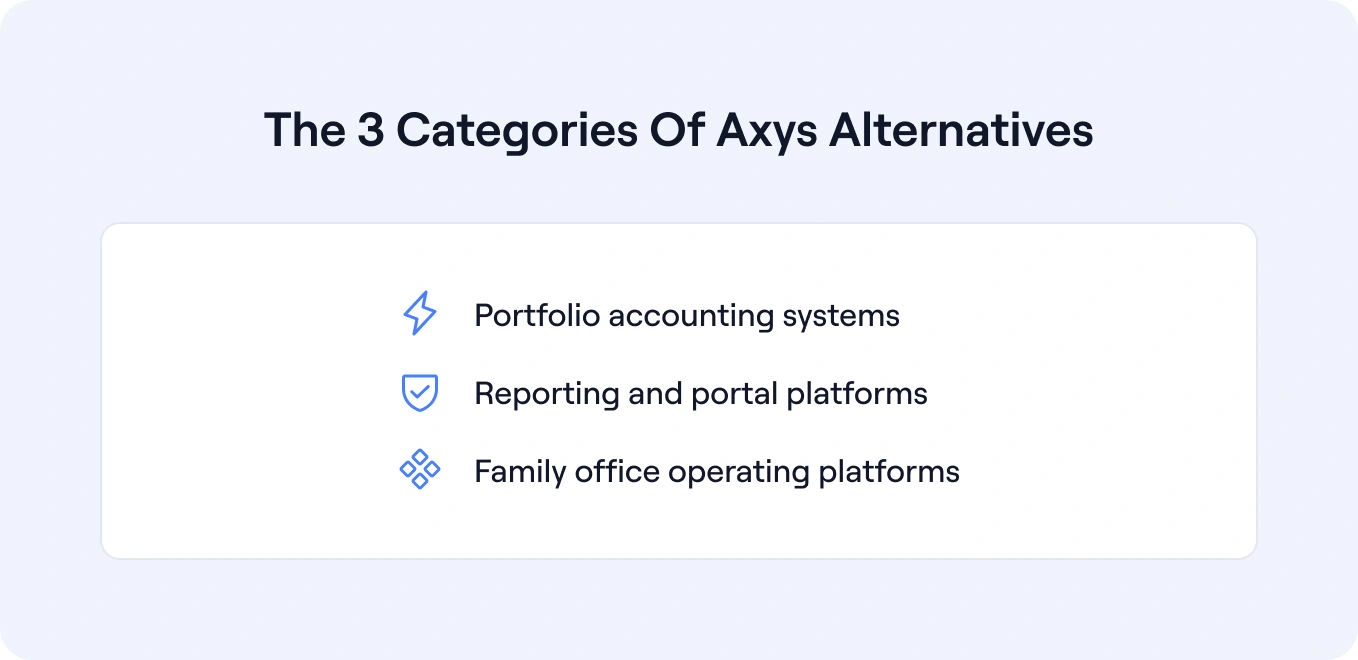
Because of this evolution, the platforms commonly evaluated as Advent Axys competitors do not all serve the same purpose. Some systems act as investment accounting records. Others focus on reporting and presentation. A newer group of platforms supports operational visibility across the family office.
Grouping vendors into categories helps ensure the shortlist reflects the actual problem being solved, rather than comparing tools designed for different roles. Within the broader portfolio management category, software vendors now range from traditional investment accounting platforms used by broker-dealers, asset managers, and smaller investment managers, to newer platforms designed specifically for family offices managing complex portfolios across multiple entities.
The sections below outline the three categories most frequently considered by single family offices.
Portfolio accounting systems
These systems act as the investment accounting book of record. They typically manage positions, transactions, cost basis, and performance calculations for investment portfolios.
Many of these platforms were originally built for institutional environments serving asset managers and larger wealth management firms. Family offices that require institutional-grade accounting workflows often shortlist this category.
Family offices that require institutional-grade accounting workflows often shortlist this category.
Reporting and portal platforms
Reporting platforms focus primarily on presentation and stakeholder communication. They aggregate investment data from multiple sources and produce dashboards, reports, and portals for principals, family members, trustees, and advisors.
Some reporting systems originated in advisory or wealth-management contexts and were later adapted for broader reporting and portal use cases.
These tools are commonly evaluated when the primary challenge is report delivery rather than accounting itself.
Family office operating platforms
A newer category of platforms focuses on centralizing data and operational coordination across the office.
These platforms typically include:
- Aggregated investment data
- Private asset registers
- Entity visibility
- Document storage
- Workflow support
Some family office operating platforms extend beyond traditional portfolio reporting by helping teams coordinate documents, ownership structures, private-asset records, and recurring workflows across multiple data sources.
They are often selected when the larger issue is fragmented operational visibility rather than investment accounting alone.
In some cases, family offices may also evaluate whether an outsourced portfolio accounting service or specialized reporting platform could reduce operational complexity, particularly when internal teams would otherwise need to maintain integrations, reporting logic, or their own overlay software across multiple systems.
A useful rule of thumb is:
- If you need investment accounting as a book of record, shortlist portfolio accounting systems.
- If you need reporting, delivery, and dashboards, shortlist reporting platforms.
- If the bigger challenge is fragmented data and operational coordination, shortlist family office operating platforms.
These distinctions help family offices compare vendors based on the actual job the platform is meant to do.
9 Modern Advent Axys Competitors and Alternatives in 2026
The platforms below are grouped according to the categories discussed above. Each section highlights where the system typically fits within a family office technology stack.
Portfolio accounting systems
These platforms are typically evaluated when a family office needs a formal investment accounting system to serve as a core record of portfolio activity.
SS&C Advent Geneva
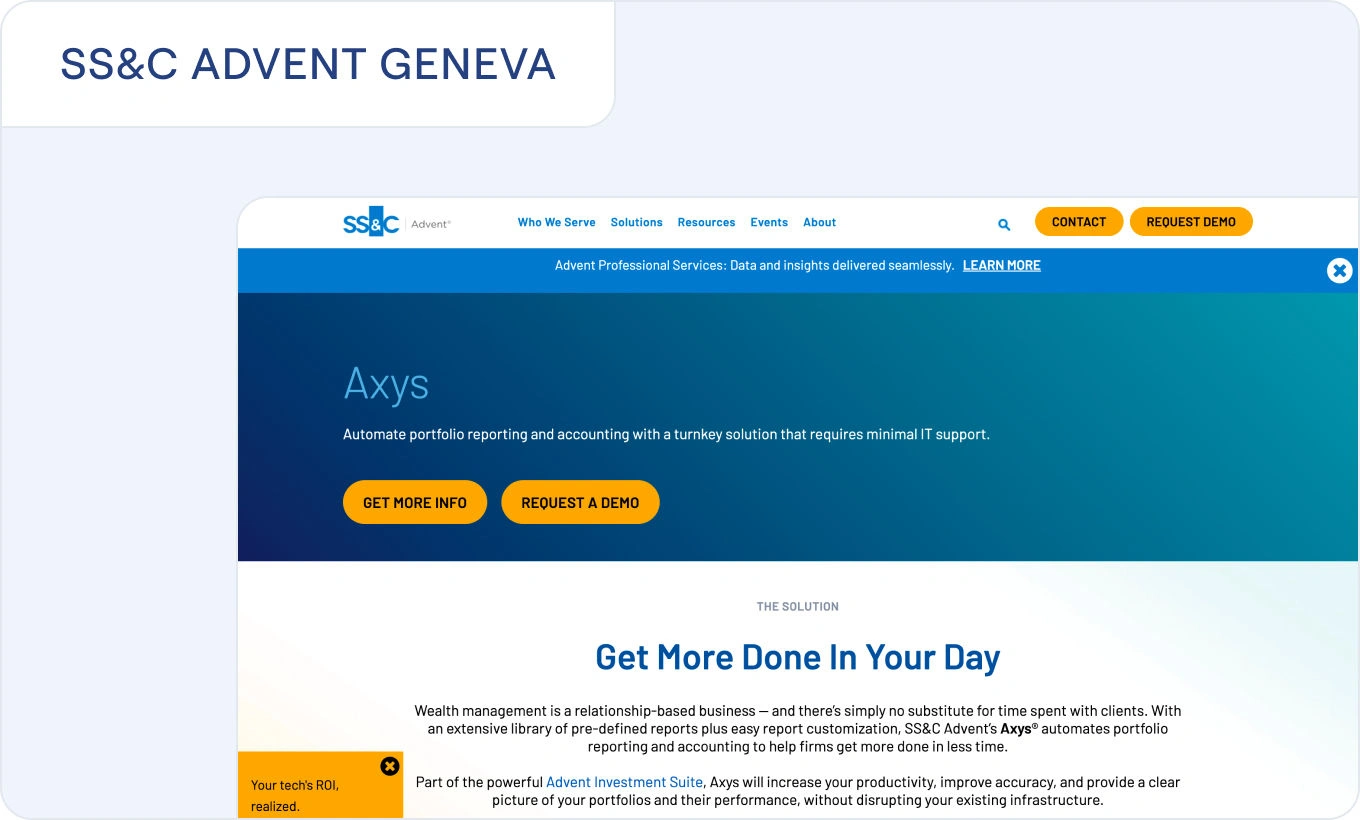
Best for: Institutional-style investment accounting environments with higher operational complexity.
Reconciliation model: Typically reconciles portfolio accounting records against custodian transactions and positions.
Strengths
- Institutional investment accounting capabilities
- Detailed transaction processing and cost-basis tracking
- Integration with other SS&C platforms
Primary recordkeeping layer: Investment accounting book of record.
Data sources and integrations to verify:
- Custodians (file-based and API connections depending on provider)
- Fund administrators
- Portfolio management systems
- Internal reporting tools
Implementation effort: High. Implementation effort is often driven by transaction volume, security master quality, and historical data migration.
Geneva supports investment managers and family offices that require institutional-grade investment accounting infrastructure.
FundCount
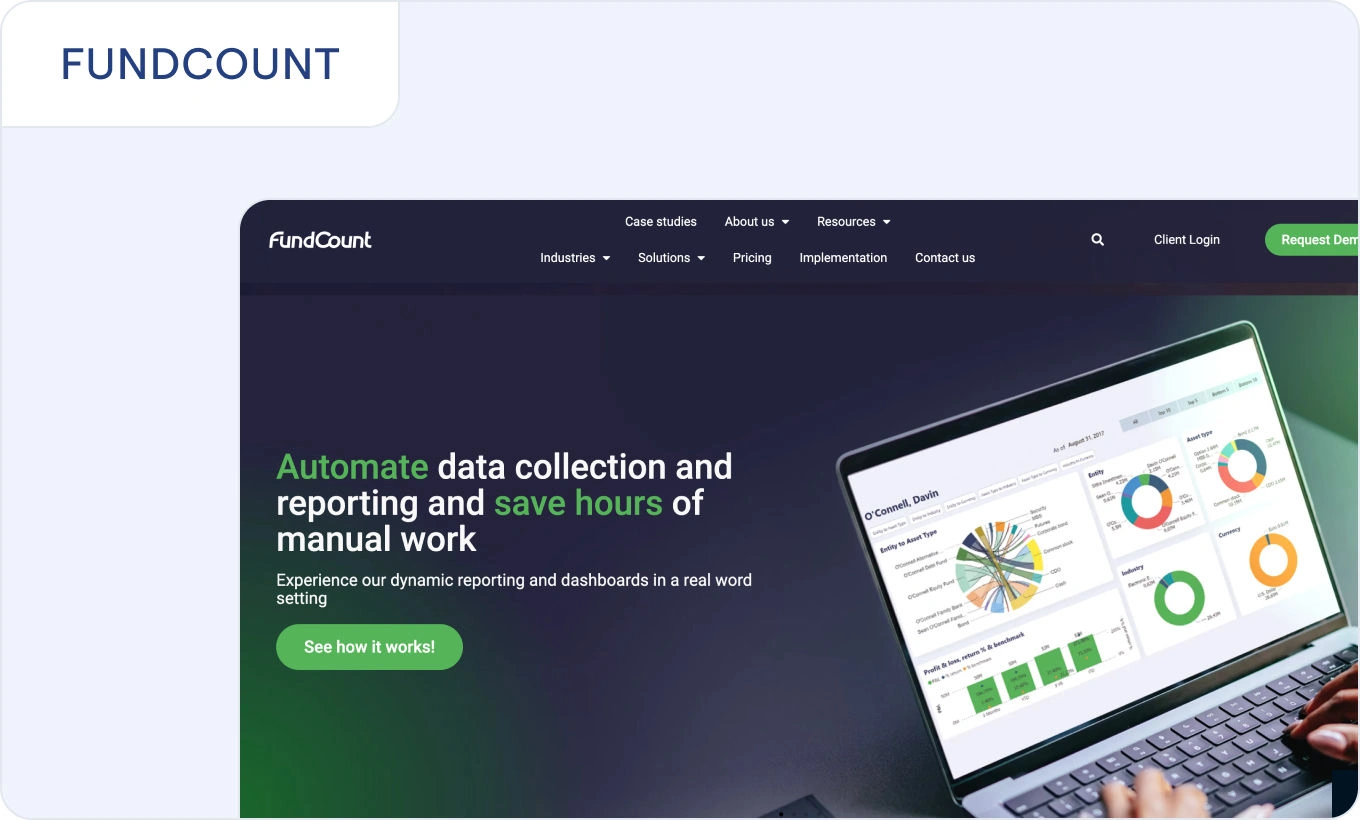
Best for: Family offices seeking a platform combining investment accounting and entity-level accounting.
Reconciliation model: Typically used to align portfolio activity, custodian data, and accounting records, depending on implementation.
Strengths
- Investment accounting and partnership accounting capabilities
- Reporting across investment and entity structures
- Consolidation across multiple portfolios
Primary recordkeeping layer: Can serve as both an investment-accounting and general-ledger layer, depending on implementation.
Data sources and integrations to verify:
- Custodians and banks
- Accounting systems
- Administrator reports
- Document ingestion workflows
Implementation effort: Medium–High. Data consolidation and entity mapping typically drive the effort.
FundCount supports family offices seeking accounting visibility across both portfolios and entities.
Asset Vantage
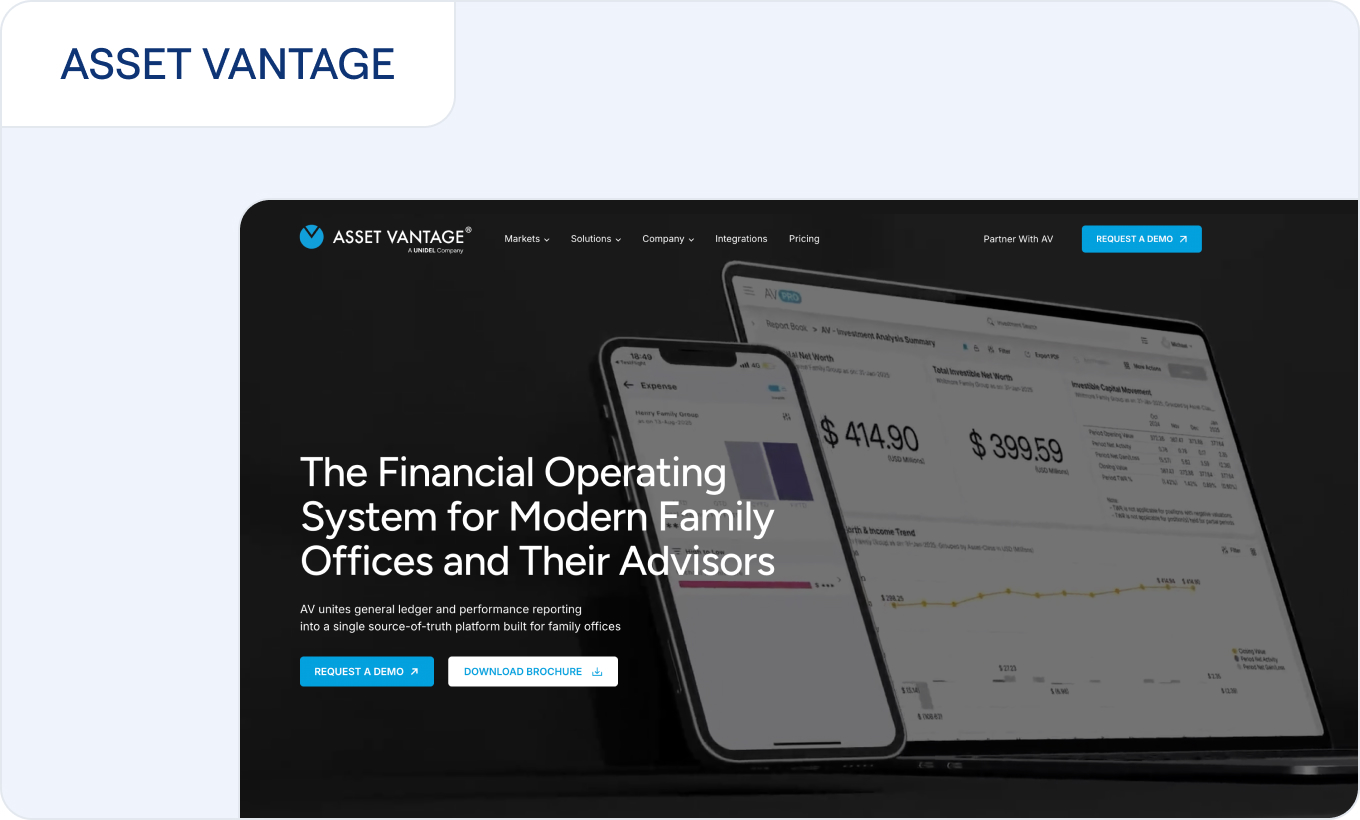
Best for: Family offices seeking combined investment accounting, aggregation, and reporting.
Reconciliation model: Confirm how custodian data is matched to internal records based on the specific implementation.
Strengths:
- Consolidated investment reporting
- Accounting and data aggregation
- Family office reporting outputs
Primary recordkeeping layer: Accounting-led system with aggregation supporting reporting and visibility.
Data sources and integrations to verify:
- Custodians and banks
- Accounting systems
- Fund administrators
Implementation effort: Medium. Complexity often depends on the number of custodians and private investments tracked.
Asset Vantage supports family offices seeking consolidated investment accounting and reporting across multiple asset types.
Reporting and portal platforms
Reporting platforms are typically evaluated when the accounting record already exists elsewhere, but reporting and stakeholder communication need improvement.
SS&C Black Diamond
.webp)
Best for: Advisory-style environments focused on reporting, dashboards, and client portals.
Reconciliation model: Typically evaluated as a reporting and portal layer fed by custodians and/or external accounting systems, depending on setup.
Strengths:
- Configurable reporting dashboards
- Portal access for stakeholders
- Integration with advisory workflows
Primary recordkeeping layer: Reporting and aggregation layer.
Data sources and integrations to verify:
- Custodians
- Portfolio accounting platforms
- CRM systems
- Data warehouse integrations
Implementation effort: Medium. The number of custodians and reporting outputs typically drives the implementation effort.
Black Diamond supports firms seeking reporting dashboards and stakeholder portals built on aggregated investment data.
Landytech
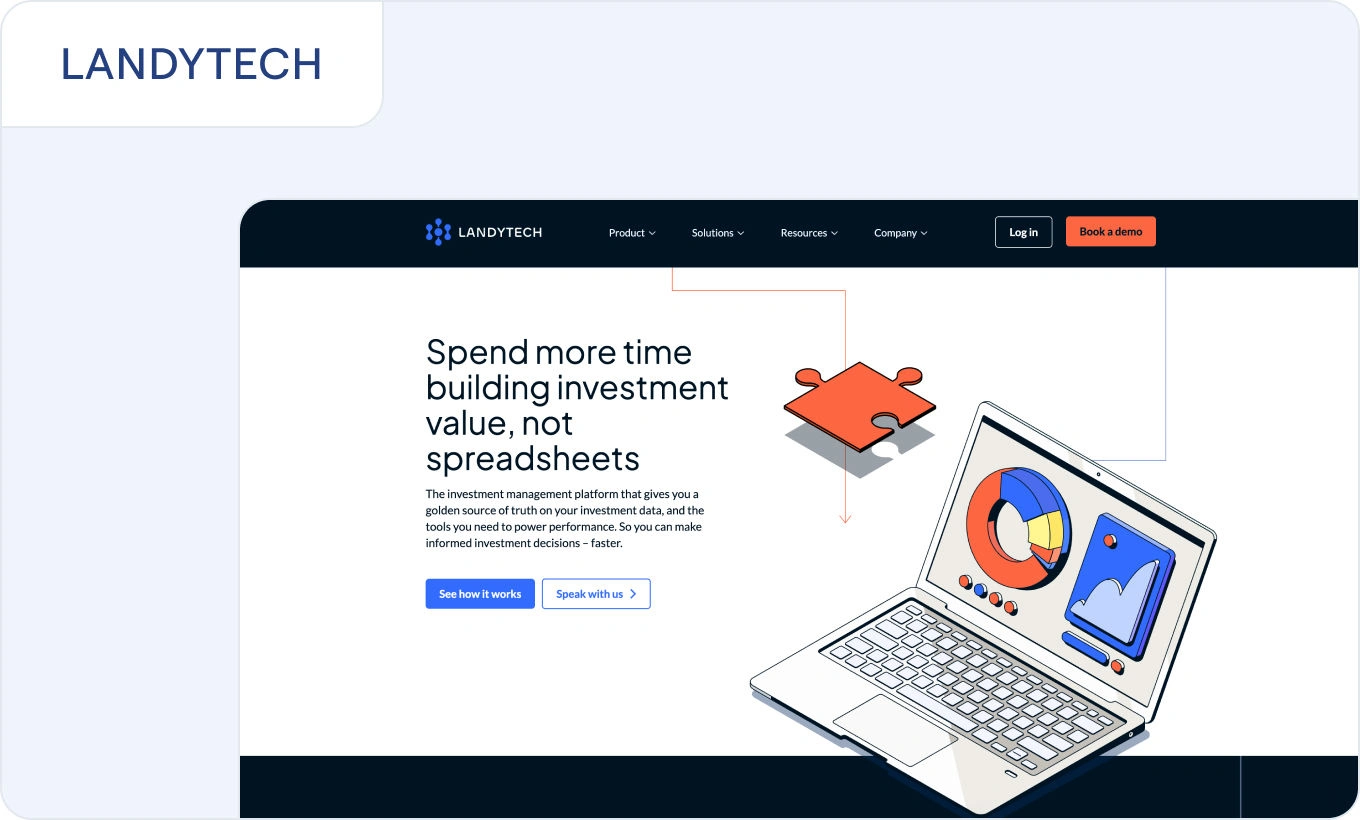
Best for: Investors seeking data aggregation and analytics across multiple investment sources.
Reconciliation model: Aggregates and standardizes data from custodians, banks, and administrators.
Strengths:
- Multi-source data aggregation
- Analytics and performance dashboards
- Investment reporting tools
Primary recordkeeping layer: Aggregation and analytics layer.
Data sources and integrations to verify:
- Custodians and banks
- Fund administrators
- Accounting systems
Implementation effort: Medium. Complexity depends on data sources and reporting configuration.
Landytech supports investors seeking consolidated analytics and reporting across investment portfolios.
SFO operating platforms
This category focuses on platforms designed specifically for single family office operating models, where reporting, private assets, and operational coordination intersect.
Asora
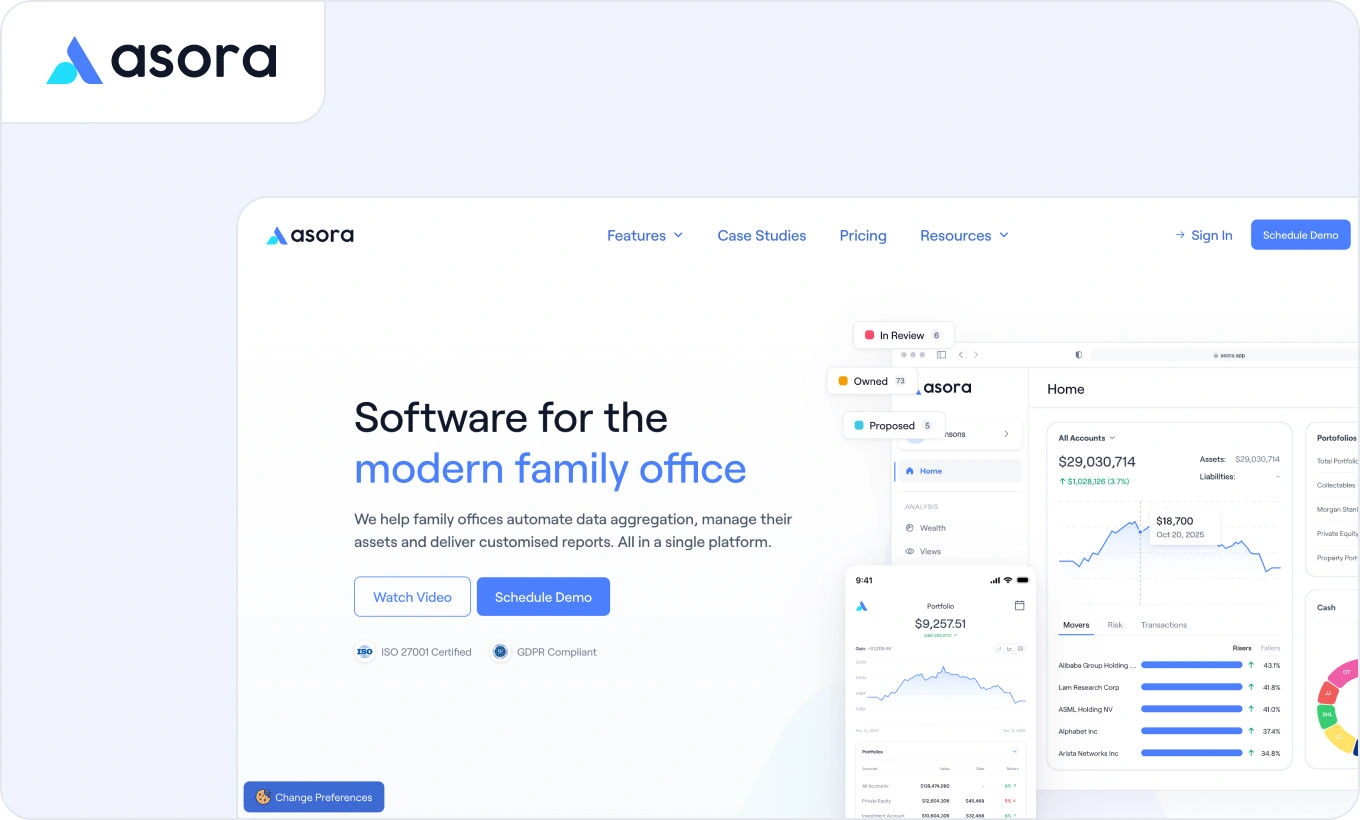
Best for: Lean single family offices seeking consolidated reporting, private asset tracking, and operational visibility.
Reconciliation model: Aggregates data from banks and custodians while flagging discrepancies for team-led reconciliation.
Strengths:
- Data Aggregation across banks, custodians, and other connected sources
- Private asset tracking for holdings such as private equity and real estate
- Documents storage linked to investments and entities
- Workflows supporting operational coordination
Primary recordkeeping layer: Aggregation and reporting layer.
Data sources and integrations to verify:
- Banks and custodians (API or file-based feeds)
- Manual entry for private assets
- Document ingestion workflows
Implementation effort: Low–Medium. Implementation effort is typically driven by the number of custodians, entity structures, and private assets tracked.
Asora supports UHNW individuals and lean family offices seeking consolidated reporting and operational visibility across investments and entities. In practice, this approach is often used by lean family offices looking to consolidate reporting across multiple custodians and private investments, as illustrated in Asora’s Bardfour family office case study.
Masttro
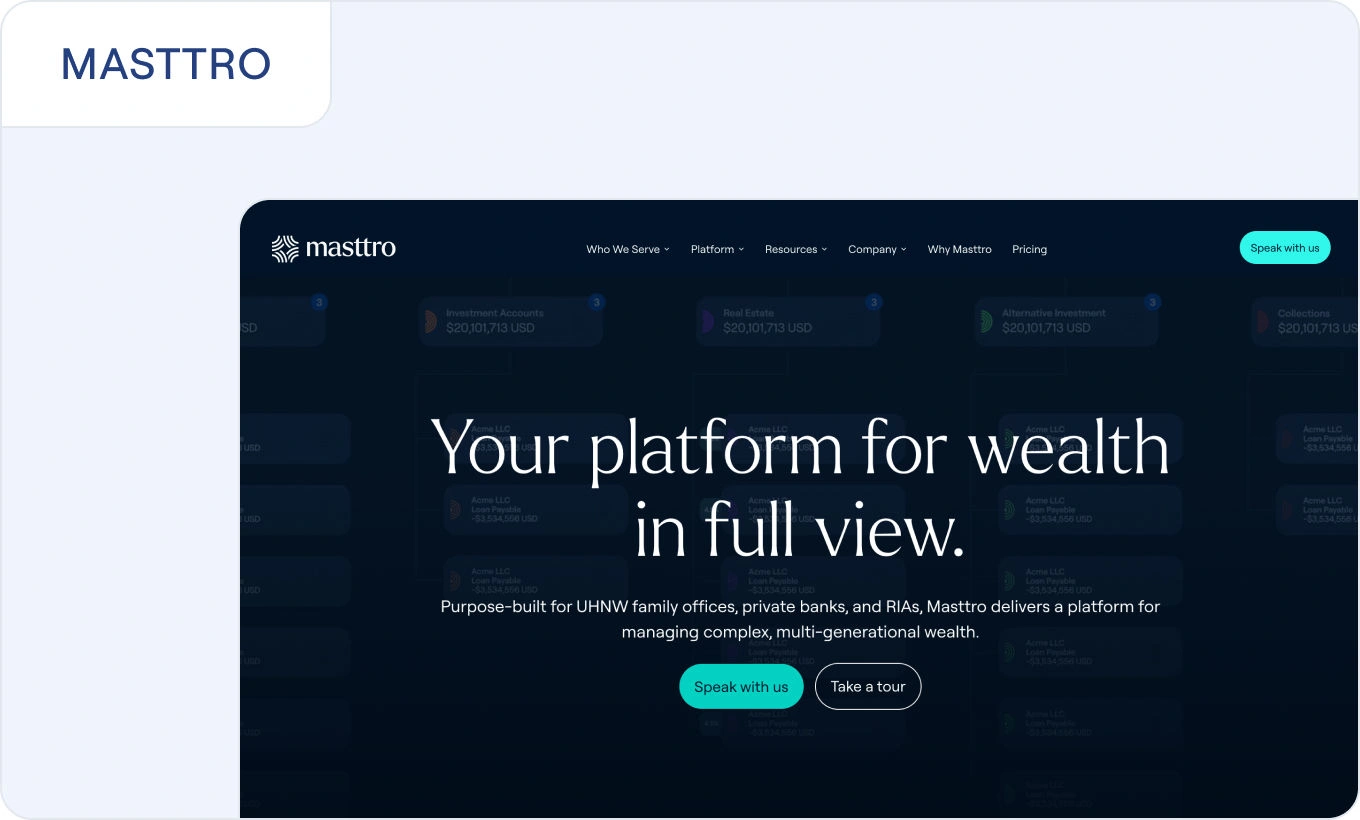
Best for: Families seeking global wealth visibility across complex ownership structures.
Reconciliation model: Aggregates investment data from custodians, banks, and other financial institutions.
Strengths:
- Wealth visibility across entities and assets
- Reporting and dashboards
- Data aggregation capabilities
Primary recordkeeping layer: Aggregation and reporting layer.
Data sources and integrations to verify:
- Banks and custodians
- Portfolio accounting platforms
- Manual data entry for private assets
Implementation effort: Medium. Data aggregation across multiple institutions typically drives implementation effort.
Masttro supports families seeking consolidated wealth visibility and reporting across complex asset structures.
Copia Wealth Studios
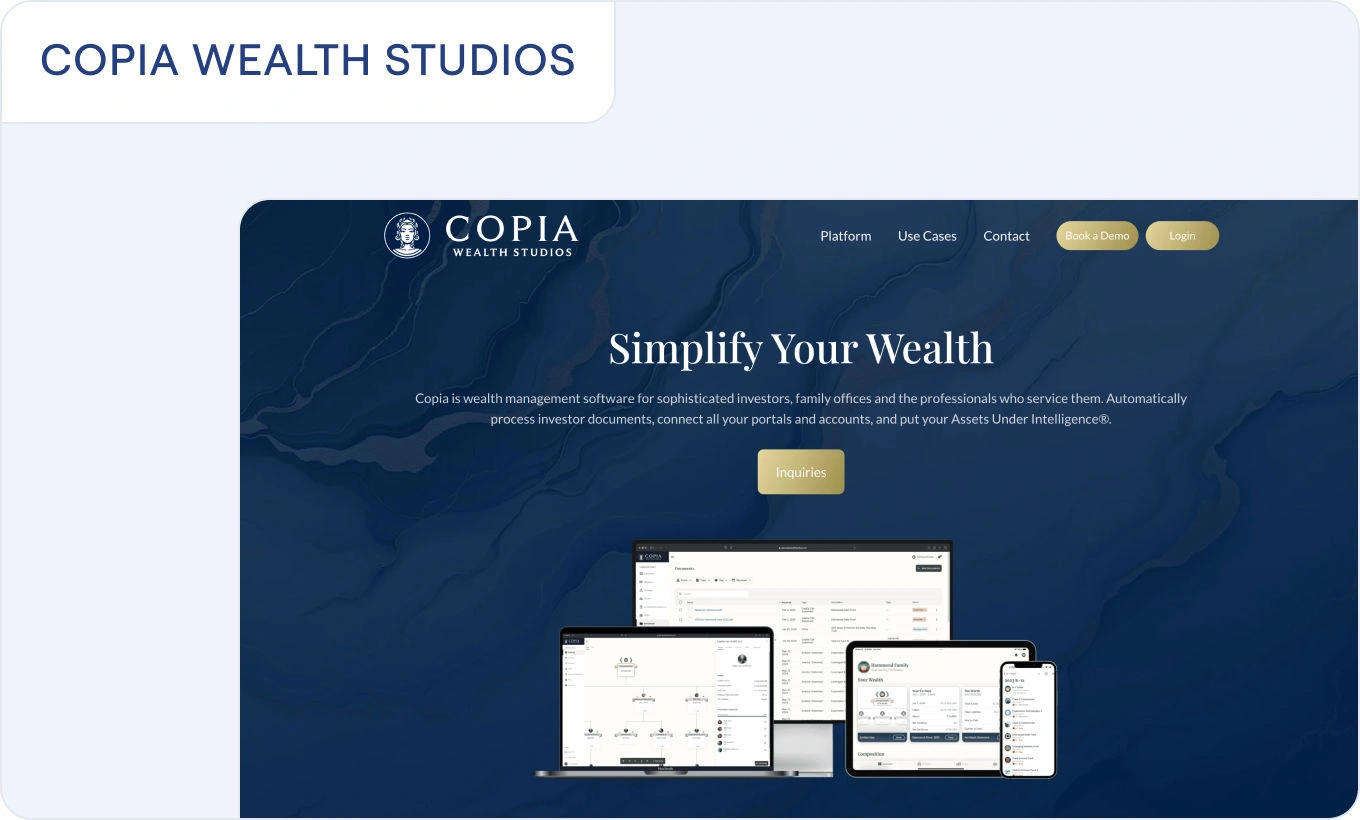
Best for: Family offices focused on alternatives and document-driven investment workflows.
Reconciliation model: Aggregates investment data from administrators, custodians, and documents.
Strengths:
- Alternative investment visibility
- Document-driven data extraction workflows
- Reporting dashboards
Primary recordkeeping layer: Aggregation and reporting layer.
Data sources and integrations to verify:
- Fund administrators
- Custodians
- Document ingestion workflows
Implementation effort: Medium. Complexity often depends on document ingestion and private asset tracking.
Copia supports family offices seeking visibility across alternative investments and investment documentation.
Vyzer
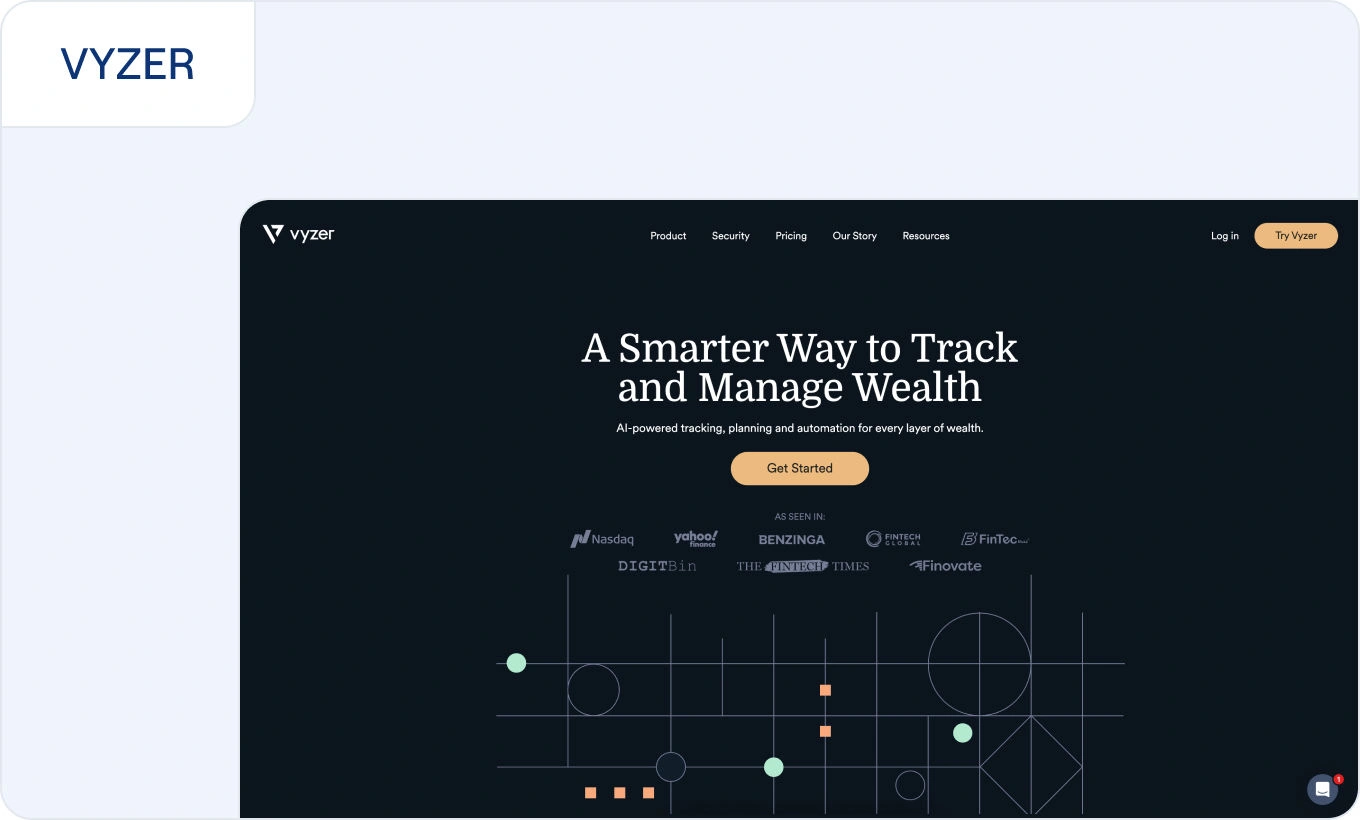
Best for: Individuals and families tracking diversified portfolios across asset classes.
Reconciliation model: Aggregates investment data from financial institutions and manual inputs.
Strengths:
- Multi-asset portfolio tracking
- Consolidated wealth dashboards
- Investment performance monitoring
Primary recordkeeping layer: Aggregation and reporting layer.
Data sources and integrations to verify:
- Banks and custodians
- Manual asset entries
- External investment platforms
Implementation effort: Low–Medium. Implementation effort typically depends on the number of accounts aggregated.
Vyzer supports investors seeking consolidated portfolio visibility across diversified assets.
Why Family Offices Search for Advent Axys Competitors in 2026
Most searches for Advent Axys competitors are driven by operational challenges rather than vendor comparisons.
Family offices do not typically change systems simply because new software exists. The shift typically occurs when reporting processes or operational coordination begin to strain under increased investment complexity.
A 2024 Deloitte Private study on family office operations found that many family offices still see gaps in operational technology investment, with 72% saying they are either underinvested (34%) or only moderately invested (38%) in the operational technology needed to run a modern business. This gap often becomes visible when teams attempt to consolidate investment data across public markets, private assets, and multiple custodians.
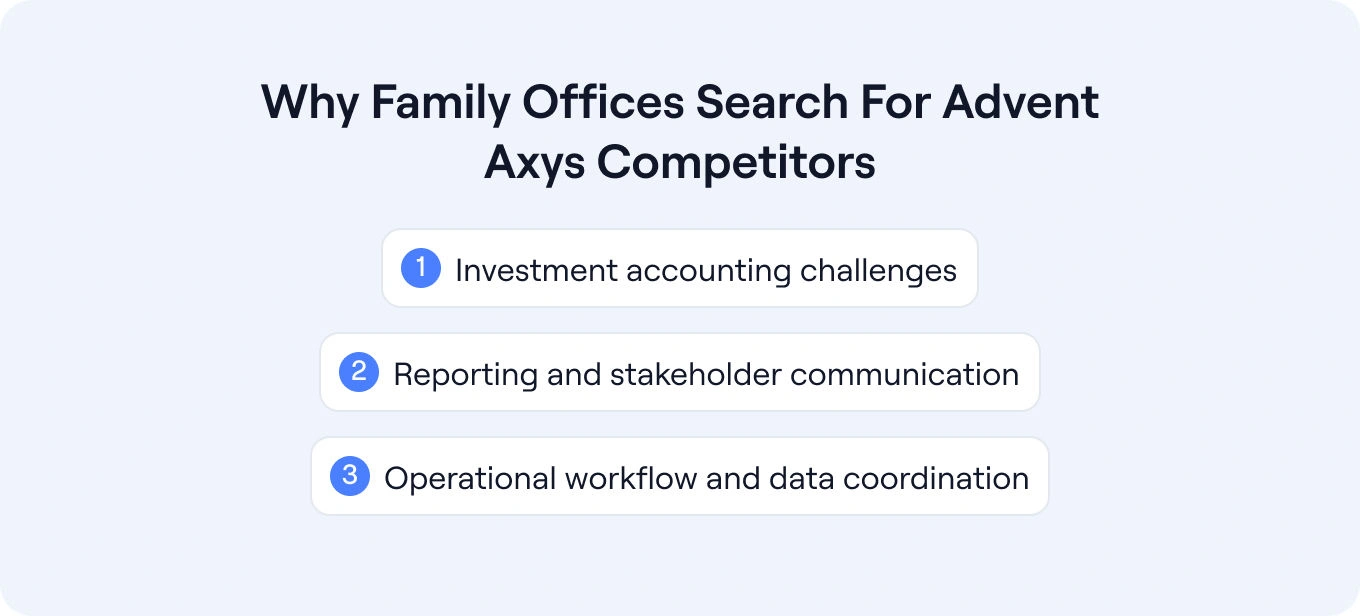
In practice, the pain points tend to fall into three operational areas.
1. Investment accounting challenges
Some family offices rely on portfolio accounting as their core investment record within their investment management workflows. When complexity increases, the accounting workflow itself can become harder to maintain.
Common triggers include:
- Increased transaction volume across custodians
- Complex cost-basis calculations across multiple structures
- Difficulty reconciling positions with custodians or administrators
These issues typically surface when an office transitions from relatively simple portfolios to more institutional-style investment activity.
2. Reporting and stakeholder communication
Reporting expectations also evolve over time.
Principals increasingly expect timely, consolidated reporting that includes both liquid portfolios and private investments. When reports require significant manual consolidation, the reporting cycle can stretch across multiple days or teams and can begin to impact reporting timeliness and stakeholder communication for principals, family members, and advisors reviewing portfolio performance.
Family offices often start searching for alternatives to Advent Axys when reporting workflows become dependent on manual exports, spreadsheets, or fragmented systems.
3. Operational workflow and data coordination
A third category of challenges sits outside traditional investment accounting.
Many family offices manage:
- Multiple legal entities
- Capital calls and distributions
- Documents and investment materials
- Operational tasks tied to reporting cycles
When these workflows sit across disconnected tools, operational coordination becomes harder. In these situations, some offices begin evaluating platforms that combine reporting with document management, operational tracking, and investment visibility rather than functioning as just a portfolio-accounting layer.
Switching From Axys Without Disrupting Your Reporting Cycle
For family offices evaluating Advent Axys competitors, the migration process itself often matters as much as the software choice.
Most successful transitions start with a structured inventory of the office’s data and reporting environment. Typical elements to review first include:
- Entity structures and ownership hierarchy
- Custodians and banking relationships
- Historical portfolio positions and transactions
- Private asset records and valuations
- Reporting templates and benchmarks
- Document repositories and permissions
Once these elements are mapped, many offices adopt a parallel run approach. A parallel run means operating the new platform alongside the legacy system for a limited period. During this phase, both systems produce the same reports so the team can compare outputs.
The duration of a parallel run varies, but it typically depends on factors such as:
- Historical data migration
- Complexity of private investments
- Number of reporting outputs required
Several common migration challenges also appear repeatedly. These include inconsistent asset identifiers, outdated entity mapping, and timing differences in private asset valuations. Another frequent issue is hidden reporting logic embedded in legacy reports that must be replicated in the new environment. Recognizing these factors early can significantly reduce migration risk.
Which Alternative is Right For Your SFO?
Choosing among Advent Axys competitors ultimately depends on how your family office actually operates. The checklist below can help narrow the shortlist.
| If your priority is… | Consider shortlisting |
|---|---|
| Investment accounting book of record | Portfolio accounting systems |
| Stakeholder reporting and dashboards | Reporting platforms |
| Consolidated operational visibility across entities and private assets | Family office operating platforms |
Final Thoughts: Choosing the Right Advent Axys Alternative for Family Offices
The search for Advent Axys competitors often reflects a broader shift within the wealth management space and the evolving needs of family offices.
Historically, SS&C Advent products have supported portfolio accounting, reporting, and related workflows across institutional asset and wealth management environments.
However, family offices frequently operate with a different structure. Their portfolios may span multiple custodians, private equity and venture fund interests, direct deals, real estate holdings, and other alternative assets. Reporting expectations also extend beyond portfolio performance into entity visibility, documents, and operational coordination across the full investment management environment.
Because of this, evaluating Advent Axys' competitors often becomes less about replacing a single tool and more about selecting the right type of portfolio management solution for the office’s operating model.
Some family offices may still require a traditional portfolio management application that acts as the book of record for investment transactions.
Yet many lean family offices increasingly evaluate platforms that aggregate investment data from custodians, banks, and third-party platforms, while also supporting document management and operational coordination.
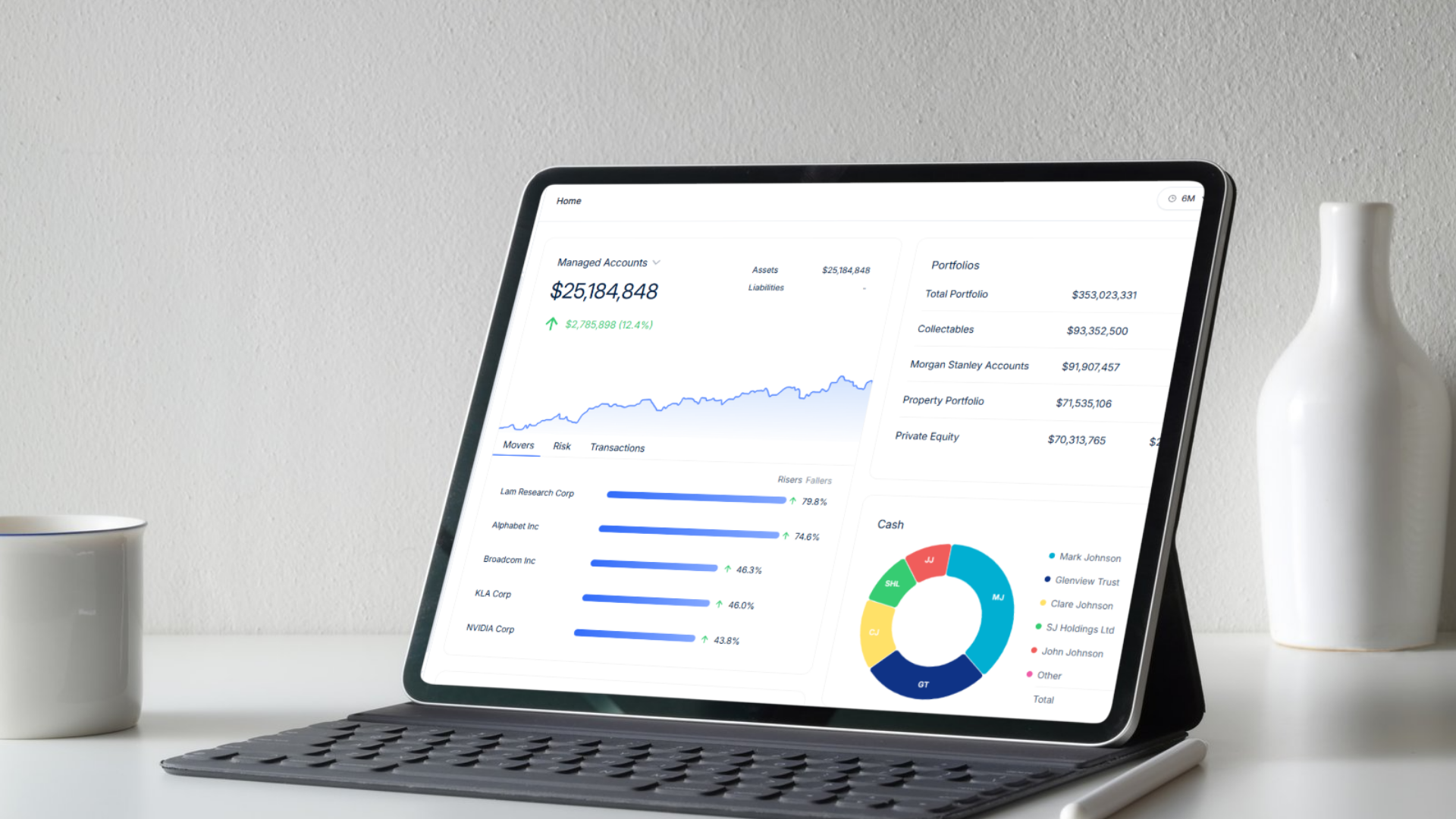
This is where modern family office platforms such as Asora are often considered alongside traditional Advent software solutions. Rather than acting only as a portfolio accounting system, Asora supports consolidated reporting, private asset tracking, document management, and operational oversight across entities, investments, and documents for family offices.
Essentially, the most effective way to evaluate alternatives to Advent Axys is to begin with the operating model of the office itself. Shortlisting platforms within the correct category (investment accounting, reporting delivery, or family office operating platforms) helps ensure the selected solution supports the broader portfolio management and reporting workflows the office relies on.
For family offices seeking consolidated visibility across investments, entities, and documents, platforms such as Asora provide a modern layer of reporting and operational coordination within the evolving investment management landscape.
Request a demo to see how Asora supports reporting and operational visibility for family offices.
FAQ
Why do family offices look for alternatives to Advent Axys?
Many family offices begin researching alternatives to Advent Axys when their portfolio management workflows expand beyond liquid investments into private equity, hedge funds, and multi-entity structures. These environments often require consolidated reporting across investments, custodians, and documents rather than only a traditional accounting record.
Is Advent Axys still used in the wealth management industry?
Yes. SS&C Advent continues to position Axys and related products for firms that need portfolio accounting, reporting, performance measurement, and reconciliation capabilities.
What should family offices evaluate when comparing Advent Axys competitors?
When evaluating Advent Axys competitors, family offices typically review how platforms handle portfolio management, data aggregation from custodians and third-party platforms, and reporting across entities and investments. Implementation effort, data sources, and operational workflows are also common decision factors.
How do modern family office platforms differ from traditional portfolio management systems?
Traditional portfolio management applications were designed primarily for asset managers and wealth management firms operating within broker-dealers and the broader wealth management space. Newer platforms designed for family offices, such as Asora, focus more on consolidated investment visibility, private asset tracking, and operational coordination across the full investment management environment.
.png)
 ISO 27001 Certified
 GDPR Compliant