Buyer's Guide · Updated May 2026

The best family office software for single and multi-family offices

An independent comparison of 11 leading platforms. See pricing, segments, capabilities, and the best fit for your operating model.

In short

What to know before you choose

If you're searching for the best family office software in 2026, the right solution depends on your operating model (single-family office, multi-family office, wealth manager, or advisor-led structure), asset mix, reporting requirements, entity complexity, and existing service-provider ecosystem. Modern family office software can serve as a central operating layer for reporting, data aggregation, workflows, and document sharing, although capabilities vary significantly by vendor.

Modern family offices benefit from dedicated platforms that handle multi-asset portfolios, complex entity structures, trusts, funds, special-purpose vehicles, and diverse investment data sources. The shift toward purpose-built solutions shows growing demand for automated data feeds, on-demand reporting, and end-to-end family office management.

Side-by-side

Family office software comparison

The right software can significantly enhance operational efficiency. Below are the leading family office platforms currently on the market.

VendorCategoryPriceBest for
AsoraFeaturedReporting & workflow platformTiered starting at €800/monthSecure, automated data aggregation and document management.
AltooClient portal & reportingNot publicly disclosedFast setup and oversight of bankable and non-bankable assets.
Black DiamondPortfolio reporting & tradingFlexible, relationship-basedInstitutional-grade portfolio accounting and performance reporting.
CanopyReporting & analytics platformNot publicly disclosedAPI-driven analytics and customizable reporting across banks.
FundcountInvestment accounting platformStarting at $24,449/yearIntegrated partnership accounting and investment reporting.
LandytechPortfolio reporting & dataNot publicly disclosedDeep custodial connectivity and automated bookkeeping.
MasttroClient portal & reportingFlat fee pricingHolistic wealth view with alternative asset tracking.
OrcaGovernance & entity managementTiered plansGovernance-focused entity management and compliance.
PandaConnectPortfolio reporting platformNot publicly disclosedMulti-custodian connectivity and performance measurement.
QPLIXPortfolio reporting & investmentNot publicly disclosedComplex legal structures and private market exposure.
SwimbirdData aggregation & infrastructureNot publicly disclosedData transformation and visibility across listed and alternative assets.

Pricing is based on publicly available vendor information and may vary by scope, integrations, and service requirements. Accurate as of March 2026; many providers do not publish fixed pricing.

Lead vendor

Asora

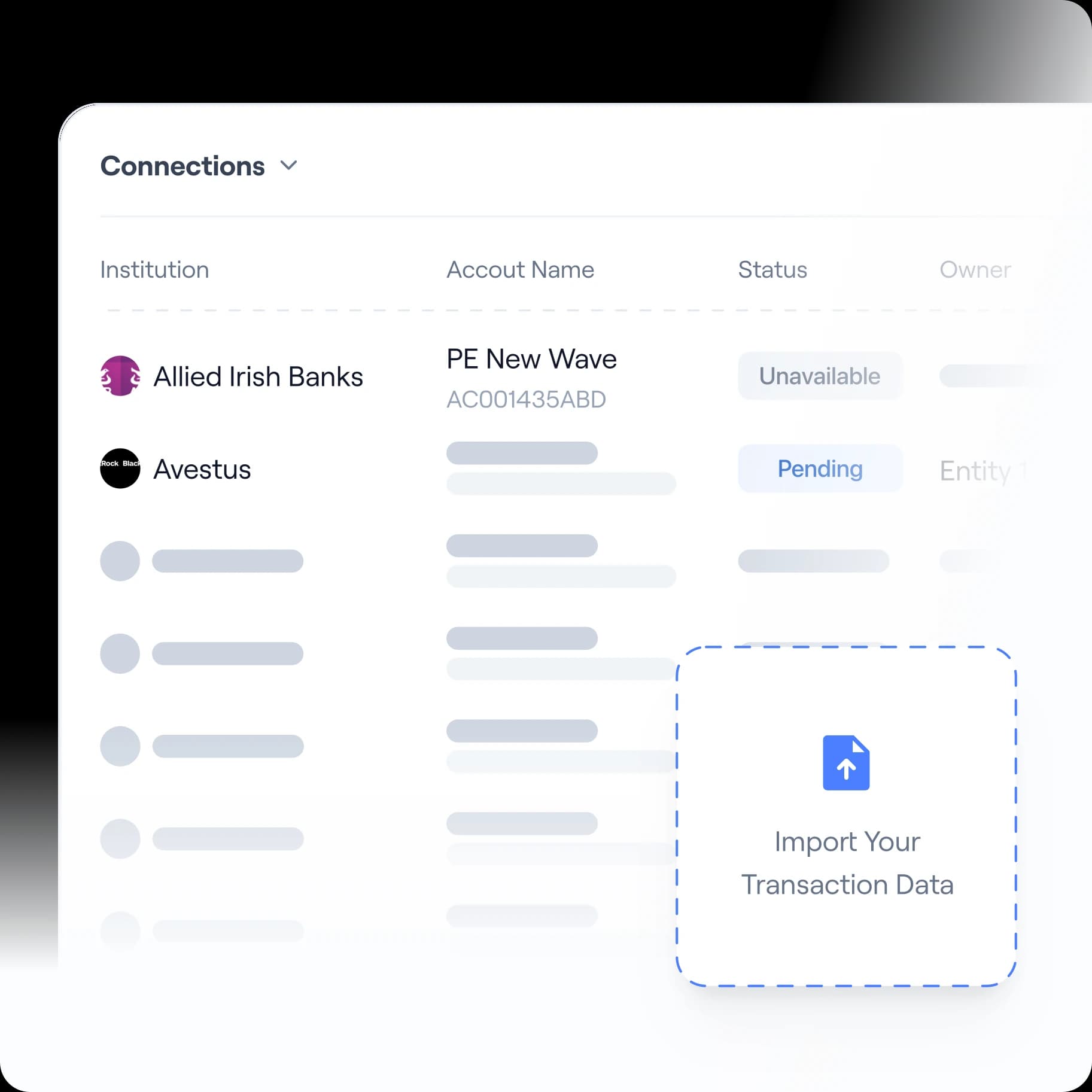
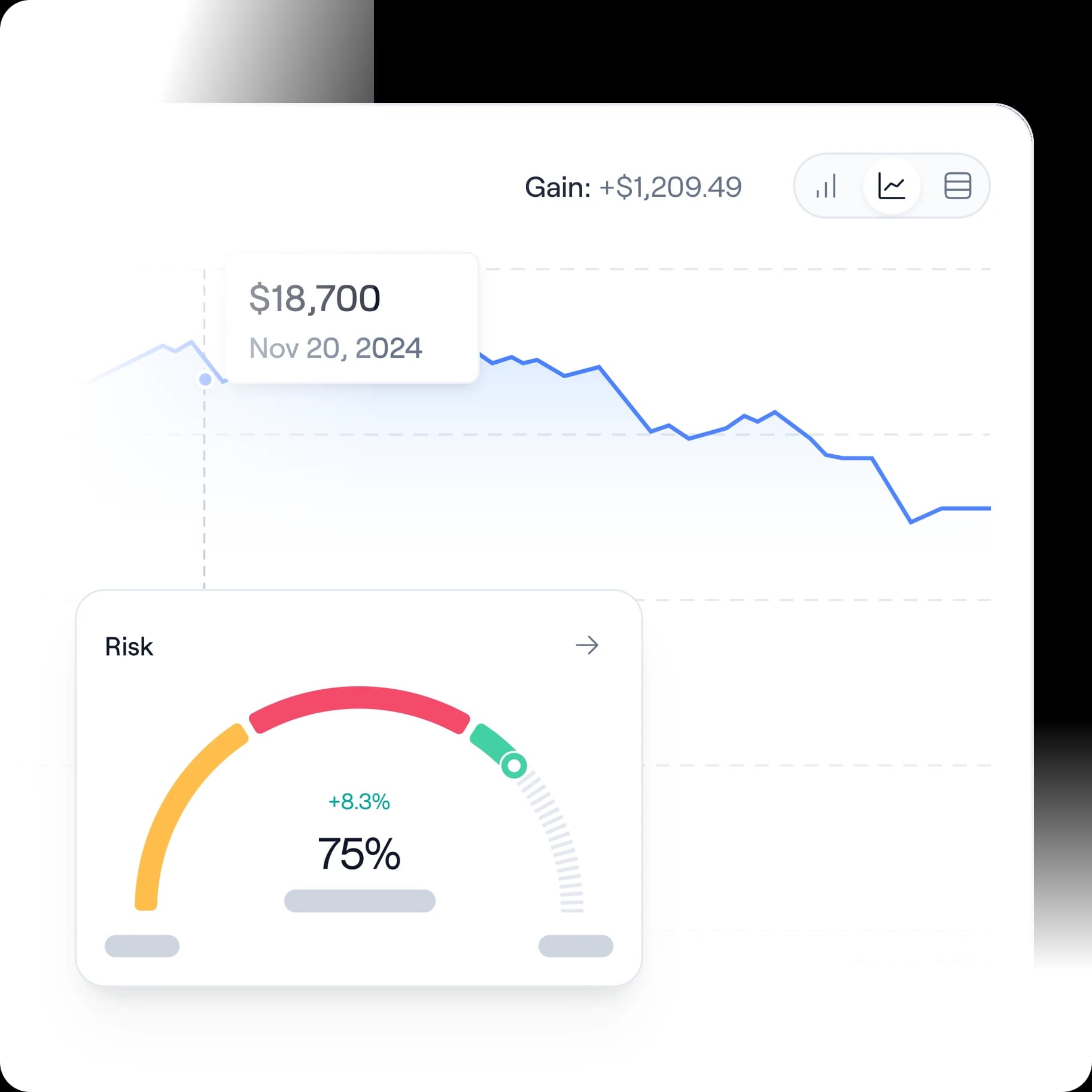
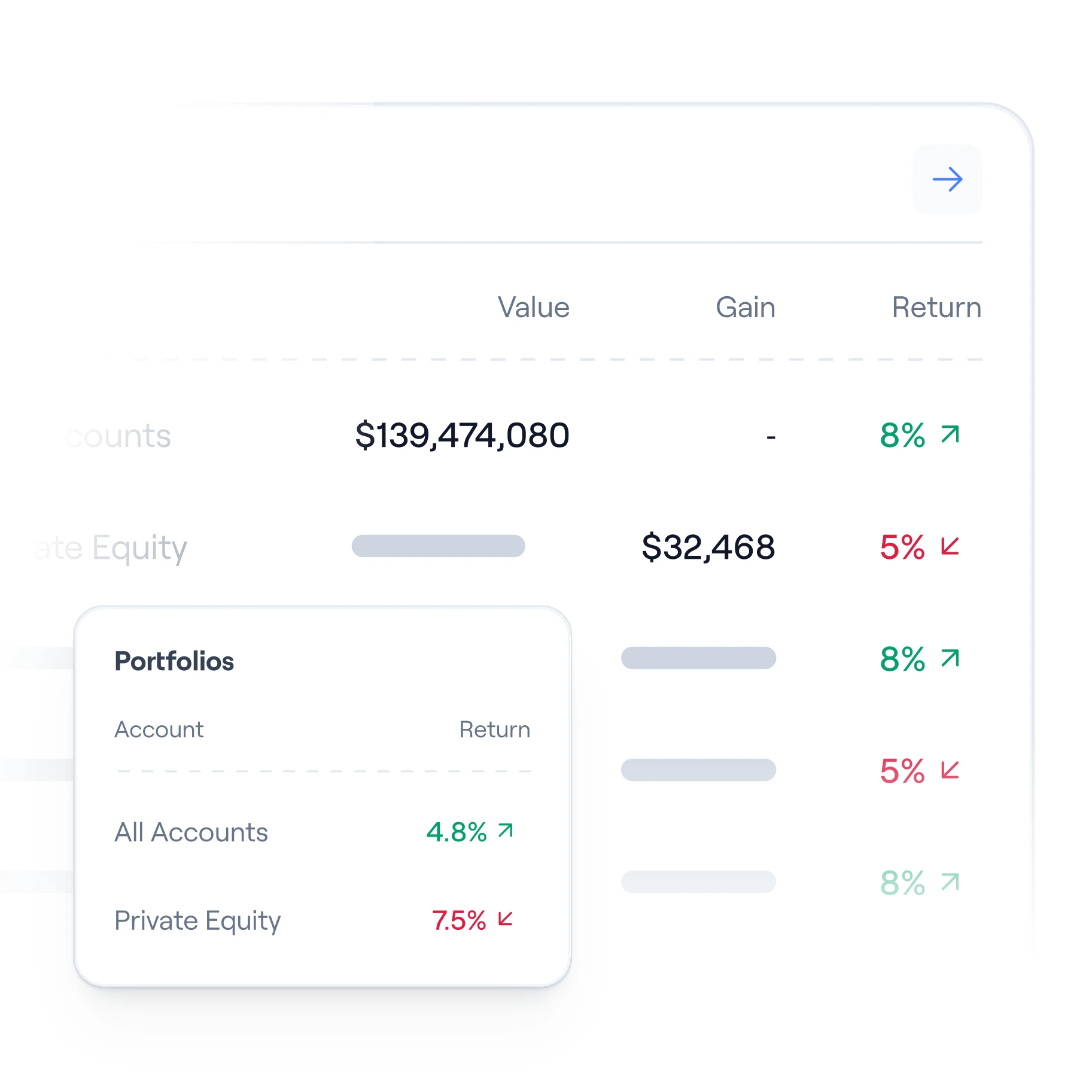
Asora is a SaaS solution for single and multi-family offices to track and oversee assets, automating data capture and providing digital on-demand reporting on the web and mobile. It provides a single secure location for all the family's financial data. The data is protected with always-on encryption and robust security protocols. Time-consuming manual handling of data and report creation are replaced with automated data feeds, comprehensive data cleansing and enrichment and digital on-demand reporting.

Price
Tiered starting at €800/month
Best for
Secure, automated data aggregation and document management.
Client segment
Ultra-high-net-worth individuals and family offices of all sizes

Implementation & onboarding

Asora typically supports implementation timelines ranging from 4 to 8 weeks, depending on the number of custodians, legal entities, and alternative assets being onboarded.

Tech stack compatibility

Asora integrates with global custodians, private banks, and alternative investment managers via automated data feeds.

Key capabilities

  • Data Aggregation
  • Customisable reports
  • Private asset tracking
  • Deal pipeline
  • Task and document management
“Omnia Capital Partners reduced files sent via email by 50% after moving to Asora.”

Omnia Capital Partners · Multi-Family Office

Read the full case study

Deep dive

Detailed reviews of each platform

Pricing, segments, implementation timelines, and capabilities for each platform — based on publicly available information.

Client portal & reporting

Altoo

Founded in 2017, Altoo helps individual wealth owners, family offices, fund managers, and advisors consolidate bankable and non-bankable assets, monitor asset allocation, manage documents and tasks, and manage risks.

Price
Not publicly disclosed
Best for
Fast setup and oversight of bankable and non-bankable assets.
Client segment
Ultra-high-net-worth individuals, single-family offices, multi-family offices, trusts and foundations, private bankers, independent asset managers

Implementation & onboarding

Altoo's onboarding includes platform access within 24 hours of contract execution, and the timeframe to establish bank and custodian connectivity depends on external paperwork with banks, usually completed within 1-4 weeks.

Tech stack compatibility

Altoo connects to bank and custodian feeds to provide consolidated aggregation of bankable and non-bankable assets, and its SaaS platform is built around secure Swiss-based infrastructure for wealth data aggregation, reporting, and document storage.

Key capabilities

  • Legal structure overview
  • Cashflow analyser / future cashflows reporting
  • Intuitive 'Explore' feature to analyse asset / performance

Portfolio reporting & trading

Black Diamond

The SS&C Black Diamond Wealth Platform is part of SS&C Advent, a division of SS&C Technologies. This cloud-native solution is widely used in the broader wealth-management ecosystem and may fit some family offices. It helps firms streamline operations and enhance client service through flexible infrastructure and dedicated support.

Price
Flexible, relationship-based
Best for
Institutional-grade portfolio accounting and performance reporting.
Client segment
RIAs, breakaway advisors, broker-dealers, family offices, banks and trust companies, asset managers, retirement service providers, foundations

Implementation & onboarding

SS&C Black Diamond does not publicly publish a standard onboarding timeframe. Implementation timelines vary based on custom configuration, reporting requirements, and portfolio accounting setup.

Tech stack compatibility

Black Diamond is a cloud-native platform that integrates with custodians, trading platforms, rebalancing systems, and CRM tools, and supports performance reporting, consolidated data aggregation, and portfolio management workflows.

Key capabilities

  • Portfolio management and reporting
  • Data aggregation
  • Trading / rebalancing

Reporting & analytics platform

Canopy

The Singapore-based company offers family offices, wealth managers, and EAM client advisors a customisable data analytics platform focused on data aggregation, performance reporting, and multi-bank, multi-asset, and multi-currency reporting, with flexible dashboards and analytics tools.

Price
Not publicly disclosed
Best for
API-driven analytics and customizable reporting across banks.
Client segment
High-net-worth individuals, wealth managers, family offices

Implementation & onboarding

Canopy does not provide publicly documented onboarding timelines on its website. Implementation schedules typically depend on data integration and custodial connections unique to each family office.

Tech stack compatibility

Canopy is a cloud-based data aggregation and analytics platform that supports integration with banks, custodians, and external systems. Its architecture is designed to accommodate flexible data inputs and enable connectivity with other tools used across the family office technology stack.

Key capabilities

  • Customisable dashboards and reports
  • Multi-bank and multi-asset data aggregation
  • Performance reporting
  • Flexible analytics across complex portfolios

Investment accounting platform

Fundcount

Fundcount provides an investment accounting and reporting platform used by family offices and related firms, with strengths in portfolio accounting, partnership accounting, general ledger, and reporting.

Price
Starting at $24,449/year
Best for
Integrated partnership accounting and investment reporting.
Client segment
Single-family offices, multi-family offices, high-net-worth individuals, asset managers, fund admins, hedge funds, private equity firms

Implementation & onboarding

FundCount structures its implementations in phases rather than a fixed timeframe, offering both managed and guided approaches based on client size, complexity, and industry.

Tech stack compatibility

FundCount emphasises integration, interoperability, and the use of APIs to enable connectivity between its platform and third-party systems such as CRM, business intelligence, reporting, and other solutions. APIs and app-based connectivity are key to automating workflows, reducing manual intervention, and enabling a unified technology stack.

Key capabilities

  • Partnership and portfolio accounting
  • Consolidated reporting
  • Unified general ledger
  • Data aggregation

Portfolio reporting & data

UK-based Landytech helps family offices use data aggregation and analytics to make informed investment decisions. The platform, Sesame, also offers portfolio management, cash flow management, and reporting features.

Price
Not publicly disclosed
Best for
Deep custodial connectivity and automated bookkeeping.
Client segment
Single-family offices, multi-family offices, asset managers, trustees

Implementation & onboarding

Landytech does not publicly list a specific onboarding timeframe; deployment duration depends on custodian connections and data aggregation needs.

Tech stack compatibility

Landytech's Sesame platform connects with 500+ custodians and data providers for automated wealth data aggregation and reporting, and can integrate via APIs with external accounting and reporting systems.

Key capabilities

  • Automated trust bookkeeping
  • Custom reporting
  • Private asset reporting
  • Look-through ownership structure

Client portal & reporting

Masttro serves family offices, wealth professionals serving wealth owners, and larger institutions. Offering a holistic view of your wealth, the platform helps with portfolio and task management, secure sharing and storage of documents, and easy integration with other tech platforms.

Price
Flat fee pricing
Best for
Holistic wealth view with alternative asset tracking.
Client segment
Larger family offices, UHNWIs, wealth managers, private banks

Implementation & onboarding

Masttro states that new client onboarding timelines depend on the scope of integration but typically last 10–14 weeks. The process includes goal and roadmap setting with the client service and onboarding team, a detailed project plan, weekly meetings, status reports, milestone check-ins, and ad hoc consultation as needed.

Tech stack compatibility

Masttro highlights direct data integrations with custodians and private markets, supporting data standardisation and accuracy across liquid and alternative assets within its cloud-based platform.

Key capabilities

  • Wide range of report templates
  • DocAI-powered extraction of fund reports
  • Global Wealth Map
  • Cryptocurrency tracking

Governance & entity management

Orca

Founded in Zurich, Switzerland, in 2017, ORCA is better described as a governance and entity-management platform for ownership structures, compliance, and related workflows, rather than a like-for-like substitute for portfolio-reporting software. It was specifically built to deal with tax, legal, and compliance obligations for anyone who manages or owns ownership structures.

Price
Tiered plans
Best for
Governance-focused entity management and compliance.
Client segment
Corporations, holding companies, investment firms, trust companies, CPA firms, private client advisors, law firms, family offices

Implementation & onboarding

While ORCA doesn't publish a standard onboarding timeline, implementation normally varies depending on entity structure, compliance mapping, and data workflows.

Tech stack compatibility

ORCA supports importing structured data via CSV templates for items such as ownership, cashflows, liabilities, and market valuations, enabling integration of financial and entity information from external systems into the platform.

Key capabilities

  • Structured charts
  • Automated forwarding of documents via email into software
  • Compliance and governance functions

Portfolio reporting platform

PandaConnect

Founded in 1997, PandaConnect offers comprehensive services for diverse asset classes, supporting investment reporting, measurement, and oversight. With precise data aggregation and transparency, it provides families with institutional-level oversight, spanning multiple banks and currencies.

Price
Not publicly disclosed
Best for
Multi-custodian connectivity and performance measurement.
Client segment
Single-family offices, multi-family offices, RIAs, foundations

Implementation & onboarding

PandaConnect does not disclose standard onboarding durations publicly. Implementation periods tend to depend on data import scope, custodial connections, and reporting setup.

Tech stack compatibility

PandaConnect's platform supports connections to national and international banks and custodians, enabling automated daily data flows, reconciliation, and consolidated investment reporting across multiple institutions and asset types.

Key capabilities

  • Investment accounting
  • Investment reporting
  • Investment administration
  • Data aggregation

Portfolio reporting & investment

QPLIX

QPLIX delivers SaaS solutions for family and investment offices, wealth management, banks, and asset managers. The software maps liquid and illiquid asset classes, and accommodates various client structures, consolidating all investment data into the database. Users can access reports and analytics through the web portal or app.

Price
Not publicly disclosed
Best for
Complex legal structures and private market exposure.
Client segment
Single- and multi-family offices, independent wealth managers, banks and financial institutions, treasury departments, foundations, and non-profit organisations

Implementation & onboarding

QPLIX does not publicly list onboarding timelines on its website. Implementation duration for similar platforms varies based on asset class coverage, legal entity modelling, and reporting requirements.

Tech stack compatibility

QPLIX's ecosystem supports direct data streams from a wide range of financial institutions and technology partners, offering pre-configured add-ons that can be installed with a few clicks. The platform integrates bank data feeds from dozens of global custodians and private banks.

Key capabilities

  • Reporting and analytics
  • Portfolio rebalancing and trading automation
  • Accounting and tax reporting
  • Legal entity management
  • Private market investment tracking

Data aggregation & infrastructure

Swimbird

The Swimbird Platform (SWIP) is a portfolio management solution offering users a holistic view of their entire portfolio. SWIP aggregates and visualises portfolio data, including assets and liabilities — all in real time. It can manage all financial instruments (listed and OTC), private equity, and alternative investments.

Price
Not publicly disclosed
Best for
Data transformation and visibility across listed and alternative assets.
Client segment
Banks, asset managers, family offices, investment companies, private equity, and venture capital firms

Implementation & onboarding

Swimbird describes a structured onboarding process that begins with an initial meeting to understand stakeholder needs, followed by data upload and customisation, integration with banks, custodians, accountants, and other counterparties, user training, and tailored ongoing support. Implementation duration varies based on individual needs.

Tech stack compatibility

Swimbird's data integration solution, Swimbird NEST, provides advanced data mapping and processing capabilities, transforming unstructured inputs (including PDFs) into standardised, validated data for portfolio analytics and reporting.

Key capabilities

  • Real-time dashboard
  • Customised reporting
  • Market and static data master
  • Data aggregation

Buyer's checklist

How to pick the right platform in 2026

There's no one-size-fits-all solution. Use these ten criteria to assess which platform aligns with your operational needs, governance, and long-term goals.

  1. 1

    Client Fit

    • Is the software purpose-built for family offices or repurposed from institutional or advisor tools?
    • Does the vendor primarily serve single-family offices, multi-family offices, UHNWIs, or wealth managers?
  2. 2

    Features and Capabilities

    • Look for platforms that align with your needs — whether it's timely dashboards, historical performance tracking, document management, or automated reconciliation.
    • Consider capabilities like alternative investment tracking, cash flow forecasting, and customisable report templates.
  3. 3

    Data Aggregation

    • How does the platform ingest data from banks, custodians, fund managers, and internal systems: through direct feeds, file imports, manager statements, portal extraction, APIs, or manual workflows?
    • Can it support both liquid and alternative assets, and how much manual intervention is required to maintain accurate, up-to-date data?
    • How does the platform handle private markets and other illiquid assets such as manager statements, capital activity, valuations, commitments, look-through reporting, and exception handling?
  4. 4

    Reporting and Visualisation

    • How flexible and customisable are the reports?
    • Can you create different views for family members, investment committees, or trustees?
  5. 5

    Integration and API Access

    • Does it integrate with your accounting platform, CRM, or document management system?
    • Are there open APIs to connect with other tools?
  6. 6

    Security and Compliance

    • What measures are in place to safeguard sensitive financial and personal data?
    • What data-protection, security, and operational controls are documented, and which jurisdiction-specific requirements are relevant to your family office and vendor setup?
  7. 7

    Ease of Use

    • Is the interface intuitive enough for non-technical users?
    • Can family members, assistants, or board members log in and navigate it easily?
  8. 8

    Client Support and Onboarding

    • Does the provider offer hands-on onboarding and training?
    • Are support teams responsive and knowledgeable about family office-specific challenges?
  9. 9

    Customisation and Flexibility

    • Can the solution adapt to your family's structure, preferences, and workflows?
    • Does it accommodate unique reporting formats or legacy data imports?
  10. 10

    Pricing and Scalability

    • How transparent is the pricing? Is it based on users, entities, or AUM?
    • Can the software scale as your family office evolves?

Why now

Family offices are replacing spreadsheets with digital platforms

As modern family offices become more complex, the reliance on manual workflows and disconnected tools is being replaced by specialised technology solutions. Family office software has emerged as a critical enabler of operational control, responsive decision-making, and scalable governance across jurisdictions and generations.

This shift is driven by several factors:

  • Growing volume and complexity of financial activities across asset classes, currencies, and legal entities.
  • Increasing demand for secure, centralised platforms that support real-time investment insights.
  • A broader move toward future-proofing family office operations against evolving regulatory requirements and generational needs.

The right software no longer just supports portfolio oversight — it acts as an integrated platform that connects stakeholders, safeguards private data, and streamlines everything from performance reporting to document management.

What gets in the way

Key challenges family offices face today

According to The Family Office Operational Excellence Report 2025, 42% of respondents still rely on spreadsheets, and around one-third continue to manually aggregate financial data.

01

Manual financial data entry

Spreadsheets and ad hoc tools require significant staff time and introduce risk through version control issues, inconsistent formats, and a lack of audit trails.

02

Fragmented or delayed reporting

Without proper reporting software, it becomes difficult to generate consolidated views of wealth, especially across public markets, private equity, venture capital, and real estate holdings.

03

Limited visibility into illiquid assets

Most generic platforms fail to adequately track alternative assets or allow look-through analysis for nested ownership structures.

04

Exposure to data security, confidentiality, operational control, and compliance risks

Sensitive financial and personal data may be stored or shared through unsecured or fragmented systems, increasing the risk of breaches, loss of control over information, and potential reputational or regulatory consequences.

What to look for

Essential features of the best family office software

Beyond core capabilities, leading platforms support permissioning, audit logs, and entity & ownership management for complex structures.

01 / 04

Unified Data Aggregation

Centralising data from custodians, banks, asset managers, and alternative investment platforms is essential for building a single source of truth. Effective data aggregation reduces manual work, enhances accuracy, and enables consolidated data views that support investment analytics and reporting. The best platforms aggregate investment and accounting data from multiple sources, including custodians, private market funds, and external accounting systems, enabling a single source of truth for reporting operations.

02 / 04

Multi-Currency and Multi-Entity Support

Family offices with global portfolios need the ability to manage multiple entities and currencies without duplicating work. Software should support consistent multi-currency reporting and clearly document FX methodologies, support legal entity rollups, and enable entity-specific reporting.

03 / 04

Custom Reports and Dashboards

Different stakeholders require different views. The ability to build custom reports and dashboards — from detailed financial statements to executive summaries — ensures that family members, business managers, and advisors all get the insights they need in the right format.

04 / 04

Timely Performance Reporting

Timely access to performance metrics like IRR, TWR, and benchmark comparisons is no longer a luxury. The best tools include support for tracking both public and private investments and offer granular analysis across asset classes. Advanced platforms deliver performance insights across both liquid and private markets, supporting IRR, TWR, and look-through analysis for complex ownership structures.

Customer story

Success with Asora: a real-world example

Tan Family Office implemented Asora to consolidate investment data, streamline reporting, and improve visibility across its portfolio. By bringing together data from multiple sources into one centralised platform, the team gained more consistent, timely insights into both liquid and private market investments.

“We're happy with the results from onboarding with Asora. It has given the family the clarity required to move forward with our objectives and allows everyone to feel aligned and supported.”

Tan Family Office · Single-Family Office

Read the full case study

Choose the platform that fits your family

For family offices seeking a portfolio management platform that truly enhances investment management and day-to-day operations, purpose-built software delivers measurable impact today and sets up scalable governance for generations to come.

Common questions

FAQs about the best family office software

The best family office software should offer data feeds from multiple custodians, comprehensive investment data aggregation, and support for different partnership structures. Key features include multi-asset portfolios tracking, reporting, and integration with existing investment management systems. Look for platforms that can handle private equity holdings, provide analytics, and accommodate the diverse wealth data requirements of modern family office management.

Intelligent family office suite solutions are purpose-built for family offices seeking comprehensive investment management capabilities beyond basic portfolio tracking. These platforms offer advanced investment data aggregation, automated reconciliation, and sophisticated analytics. Unlike generic wealth management tools, they provide family office professionals with reporting, multi-asset portfolios support, and specialized features for managing wealth across generations.

Pricing for solutions varies significantly based on features, assets under management, and complexity. Entry-level platforms may start around $11,000 annually, while comprehensive intelligent family office suite solutions can range from $50,000 to $200,000+ yearly. Costs typically depend on factors like automated feeds quantity, investment data volume, number of entities, and advanced features like equity holdings tracking and partnership structures support.

Investment data aggregation is crucial for effective family office management. Automated data feeds eliminate manual processes, reduce errors, and provide real-time data across all holdings. This capability enables family office professionals to deliver timely analytics, comprehensive investment management oversight, and accurate reporting.

The best family office software solutions offer robust support for equity holdings, real estate, hedge funds, and other alternative investments within multi-asset portfolios. Leading platforms provide specialized investment data aggregation for illiquid assets, automated processing of capital calls and distributions, and sophisticated analytics that include IRR, MOIC, and look-through reporting. This functionality is essential for family offices seeking comprehensive investment management beyond traditional securities.