.jpg)
TL;DR
The Asora vs Copia Wealth Studios decision centers on operational philosophy: family office automation versus alternative-focused intelligence, particularly in the context of wealth management software. Copia Wealth Studios positions itself around ‘assets under intelligence,’ emphasizing visibility into alternative assets. Asora focuses on broader family-office automation and data aggregation workflows.
Introduction
When family offices evaluate Copia Wealth Studios vs. Asora, they’re comparing two fundamentally different approaches to management software for a family office. Both platforms serve sophisticated investors and family offices, but they prioritize different aspects of the wealth management workflow.
Copia Wealth Studios focuses on alternative asset intelligence and investor collaboration, while also supporting bankable assets across the portfolio. Its position in the wealth management industry is as a modern solution for families and allocators that need a deeper understanding of their illiquid investments. The platform focuses on providing new light on alternative asset performance and manager relationships.
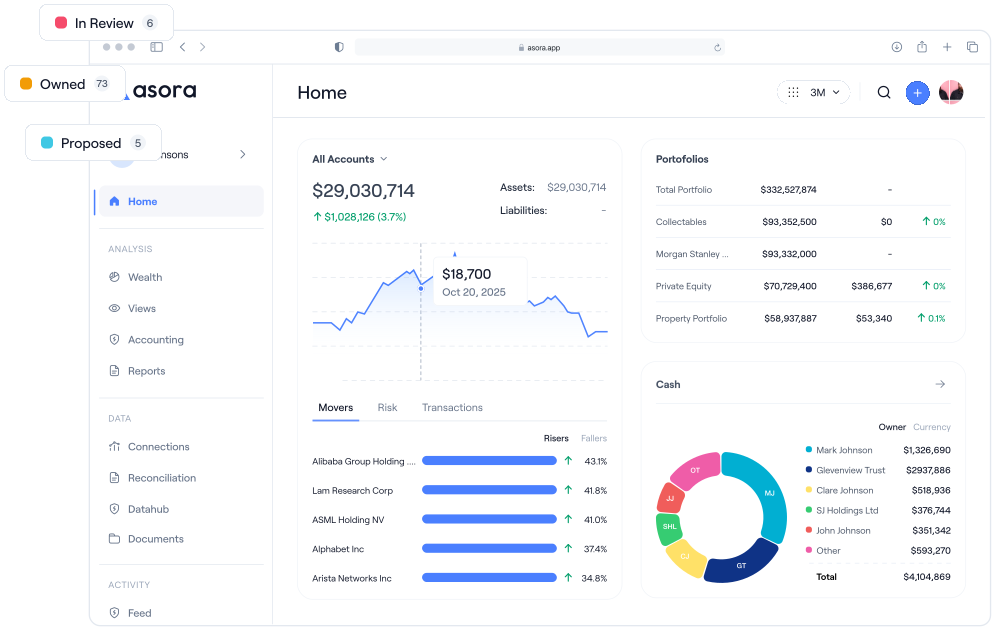
Asora was built for modern family office operations, covering aggregation, entity mapping, reporting, workflows, and mobile access in one platform. It addresses everything from multi-entity ownership mapping to mobile access for principals. Alternatives are incorporated as part of a broader family office management framework.
Who Each Platform Is Really For
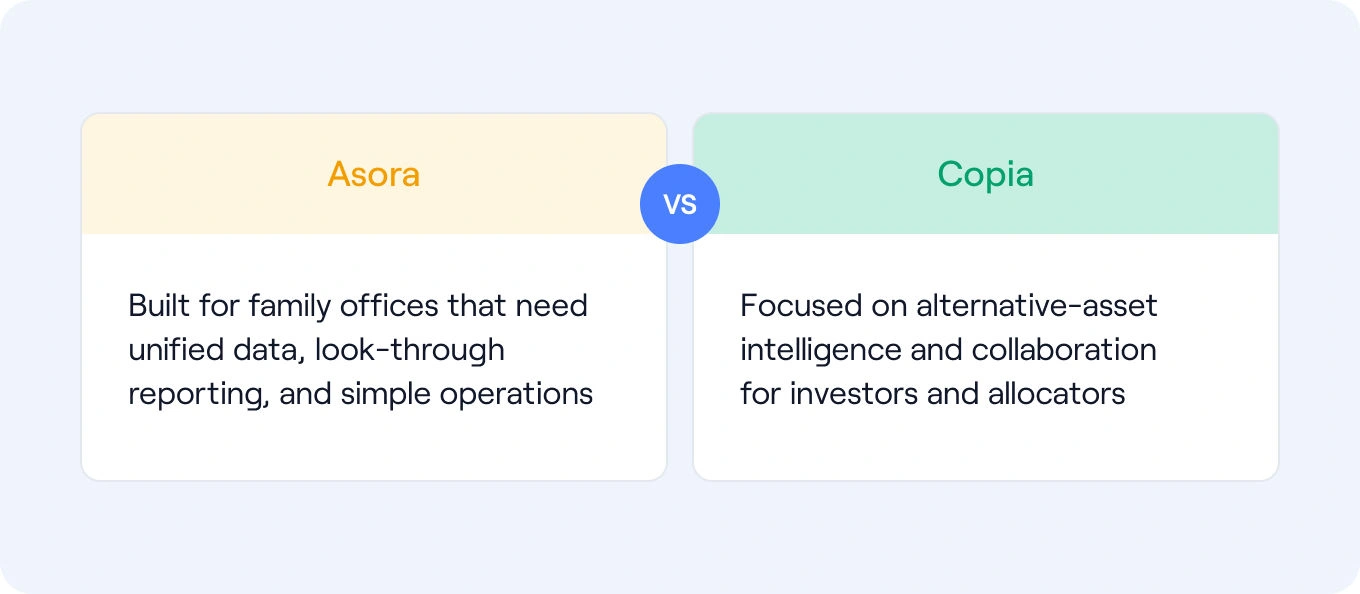
Asora serves single family offices and ultra-high-net-worth individuals and families that need unified data management, look-through visibility to wealth owners, efficient portfolio management reporting for the team, and end-to-end workflow management for family office operations without requiring dedicated power users or technical teams.
Copia Wealth Studios markets itself as providing alternative-asset intelligence and collaboration tools for allocators, investors, and family offices with exposure to private and illiquid assets.
Use Cases That Decide the Buy
Aggregation Across Banks And Custodians
Family offices often manage accounts across banks and custodians. Without one source of truth, teams spend weeks reconciling data every quarter.
-
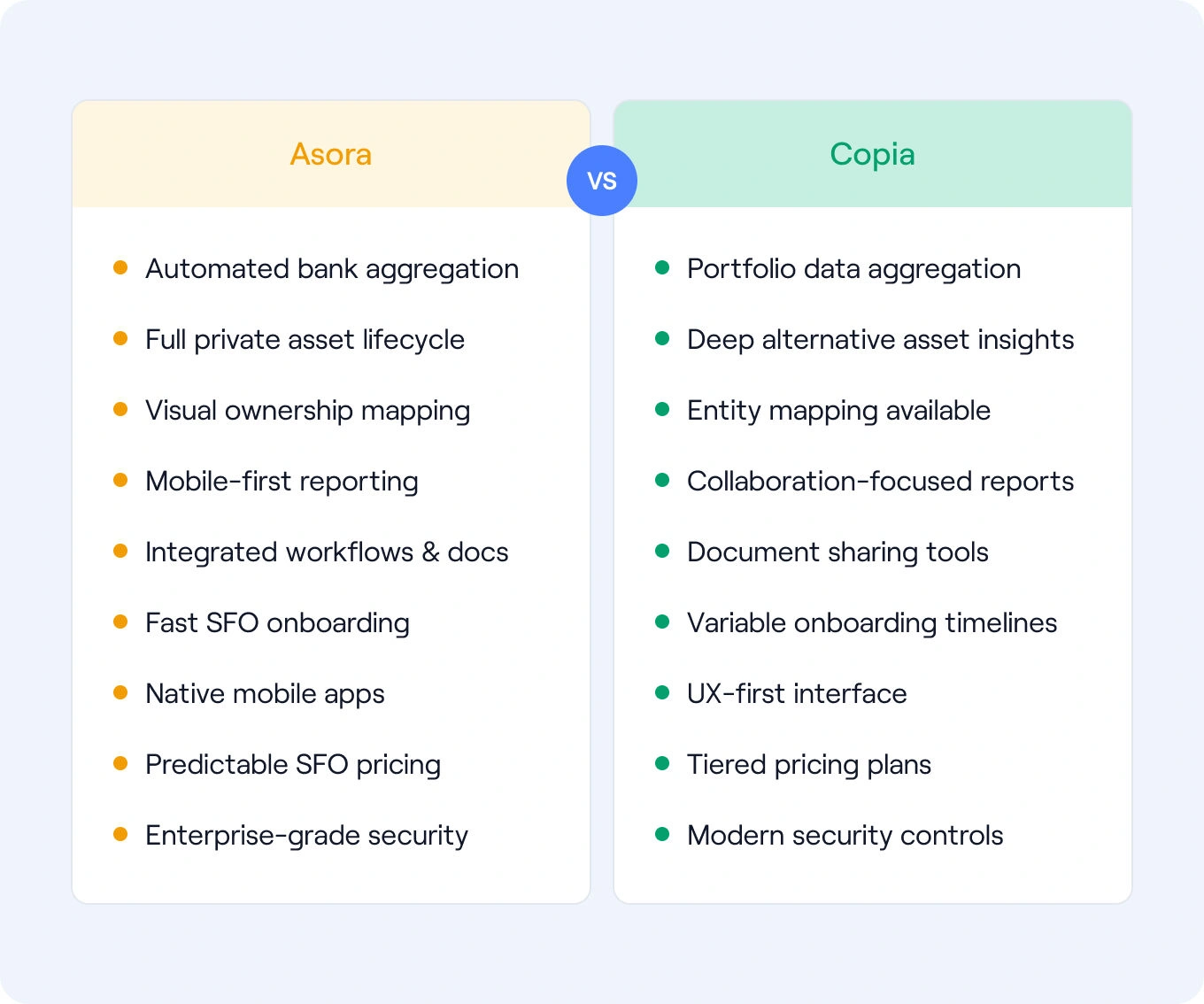
Asora provides automated data aggregation with a reliable connection guarantee to any bank that provides data feeds. The platform handles reconciliation workflows and practical exception handling, designed for family office teams managing complex ownership structures, providing a unified view that reduces reliance on multiple systems.
-
Copia Wealth Studios provides data aggregation and consolidated portfolio visualization. The platform also focuses on alternative investments to help families gain a better understanding of their entire portfolio composition.
Alternative and Private Asset Tracking
Private equity capital calls, venture capital distributions, real estate valuations, and direct investment tracking require consistent IRR and TWR calculations across entities, along with proper cash management.
- Asora’s private asset tracking module tracks commitments, capital calls, distributions, and valuations, with visibility into manager performance across the entire portfolio.
- Copia Wealth Studios’s focus on alternative visibility includes sophisticated capital call tracking and decision support tools designed for allocators and families with significant illiquid assets. The platform is excellent at providing a deeper understanding of alternative asset performance and manager relationships.
Multi-Entity Ownership Mapping
Complex family structures, including trusts, SPVs, holding companies, and international entities, require both partnership accounting capabilities and consolidated views for informed governance and estate planning decisions.
-
Asora’s Wealth Map visualization provides immediate clarity on ownership structures with look-through exposures across all entities, giving family offices a clear view of governance requirements and beneficiary interests.
-
Copia Wealth Studios provides entity mapping within its system of record; family offices can explore how this supports their specific ownership structures.
Reporting For Principals And Advisors
Principals require rapid clarity on mobile devices for quick decisions, operations teams need detailed drill-down capabilities, and wealth managers require flexible exports for their own portfolio analysis.
- Asora offers principal-friendly dashboards with customized reports and mobile applications that reduce PDF churn and email sprawl. Family members can access current portfolio information instantly without waiting for staff to generate reports.
- Copia Wealth Studios offers automated reporting designed to facilitate collaboration between allocators and investors, with a focus on providing insights into portfolios and managers.
Workflows and Document Management
Tasks and deal pipelines require centralization on a single platform, while documents necessitate secure storage with granular access controls and easy retrieval for due diligence and compliance purposes.
-
Asora integrates workflow management and document management with role-based access across the entire platform. Custom tags keep files searchable, and secure upload links collect documents from team members and external parties without adding risk.
-
Copia Wealth Studios includes collaboration and document-sharing features; family offices can review available approval and audit options during implementation.
Onboarding Speed, Service and Adoption
Lean family office teams often struggle to support lengthy implementations that disrupt ongoing operations or require extensive technical resources for successful adoption, thereby limiting their ability to optimize workflows.
- Asora delivers go-live in weeks, with SFO-focused onboarding teams that understand family office operations and a clean, easy-to-navigate UI/UX. Quick time to value with training that improves user adoption across different roles, from principals to operations staff.
- Copia Wealth Studios emphasizes modern UX design, focusing on user experience. Implementation timelines and migration processes vary by client; Copia highlights a modern, user-focused experience.
Mobile Experience
Principals make investment decisions on the move and need secure access to current portfolio information without compromising sensitive family data.
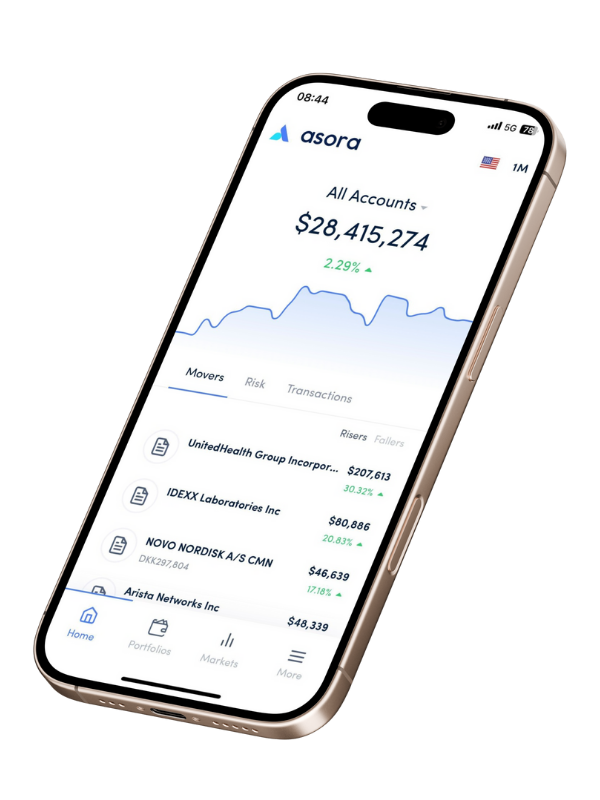
- Asora offers iOS and Android applications with role-based access controls. Principals can access their holistic view of wealth across all entities and asset classes, making informed decisions anywhere without relying on static reports.
- Copia Wealth Studios offers a modern interface prioritizing user experience; details on native mobile functionality depend on the current product scope.
Pricing and Total Operating Costs
Family offices require predictable spending that scales appropriately with their growth, without hidden costs that complicate budgeting or AUM-based pricing that penalizes success.
- Asora offers SFO-aligned pricing tiers for lean teams, rather than a flat fee, thereby avoiding institutional overhead. The pricing includes all features and unlimited users, along with optional add-ons.
- Copia Wealth Studios offers transparent, tiered pricing for families and allocators, featuring a complimentary Core tier and paid plans that clearly outline inclusions and annual commitments, billed monthly.
Security, Privacy, and Compliance
Sensitive family data requires enterprise-grade protection with granular permissions, audit trails, and compliance frameworks that meet global privacy requirements.
-
Asora provides a granular permissions system with encryption, a secure document vault, mobile two-factor authentication, ISO 27001 certification, and GDPR compliance. The security approach enables family access while maintaining strict controls over sensitive financial data.
-
Copia Wealth Studios offers a modern security posture expected for sophisticated investors. Families can confirm specific certifications, access control granularity, and audit logging depth for their compliance and privacy requirements.
Real-World Outcomes
The practical differences between these software options become clear through actual family office implementations and their operational results. Examples from Asora clients illustrate how automation impacts operational efficiency.
Omnia Capital Partners replaced weeks of manual reporting processes with automated aggregation, creating a single source of truth for all client assets. The transformation eliminated three-week data compilation cycles while reducing file-sharing risks by over 50%.
Capstone Family Office reduced reporting time from days to under 10 minutes using automated dashboards and mobile access. This operational improvement enabled faster strategic decisions while providing principals with instant access to current portfolio information for more informed decisions.
Bardfour Family Office went live on Asora in under four weeks, replacing spreadsheets and siloed systems with an interactive Wealth Map that centralized ownership and accelerated estate-planning decisions. The transformation created a single source of truth across entities and accounts, enabling faster and more structured discussions and clearer portfolio views for informed decision-making.
Request a demo to see how the right family office automation can eliminate operational bottlenecks while providing the visibility your family needs.
Making the Right Choice for Your Family Office
If your family office focuses on simplifying operations, covering data aggregation, entity reporting, and mobile access for principals, Asora provides an integrated platform that automates key workflows across all asset classes.
If your family office focuses on portfolio insight and collaboration, combining data across traditional and alternative assets, Copia Wealth Studios delivers tools for analysis, reporting, and engagement within a unified environment.
The right choice depends on your operating model and priorities; effective technology should improve efficiency and visibility without adding complexity.
.png)
.png)
 ISO 27001 Certified
 GDPR Compliant