
TL;DR
Alternative investments like private equity and real estate are hard to track due to fragmented data and manual processes. Asora simplifies this with automated tracking, performance metrics, structured dashboards, and pipeline visibility - all in one place.
Introduction
Alternative investments are an increasingly important part of family office portfolios. Whether it's hedge funds, direct investments, venture capital, private equity, real estate, or collectibles, these alternative holdings offer diversification, the potential for higher returns, and greater control compared to traditional public markets.
According to Deloitte Private's 2024 Global Family Office Insights - The Top 10 Family Office Trends , private equity investments now make up 30% of the average family office portfolio, up from 22% in 2021.
Despite this growing focus, tracking alternative investments remains a significant challenge due to fragmented systems, inconsistent data, and reliance on outdated tools.
Tracking capital calls, distributions, valuations, and returns manually across PDFs, portals, and emails causes inefficiencies, missed insights, and inconsistent reporting. As portfolios grow in complexity, so does the risk of human error, making a digital solution not just helpful, but essential.
How and why family offices track alternative investments
Alternative investments include hedge funds, PE funds, real estate, and direct investments, among others. Unlike public assets, they do not have a centralised market with real-time pricing, making valuation and performance tracking more complex.
Many family offices still rely on manual processes, storing deal information in spreadsheets and PDFs across multiple platforms. This approach lacks consistency, making it difficult to track commitments, valuations, and returns efficiently.
Why alternative investments tracking is difficult for family offices
Alts don't follow a standard lifecycle or reporting structure - making them significantly harder to track than public assets. Different asset types come with their own timelines, rules, and documentation requirements:
- **Private equity funds:**PE funds follow a structured lifecycle: from initial commitment, through capital calls and distributions, to final exit. Managing them means tracking:
- Capital call notices
- Distribution notices
- Quarterly capital account statements
- K-1s
- **Hedge funds:**These require notice periods for redemptions and often restrict liquidity. Core documents include:
- Monthly capital account statements
- Redemption confirmations
- K-1s
- **Direct investments:**These often span long periods and generate tax-relevant documents such as:
- K-1s
- Asset-level financials and valuation updates
Each asset class brings its own complexity. Collectively, they create a fragmented reporting ecosystem that's nearly impossible to scale manually. Tracking these documents across multiple entities, inboxes, and spreadsheets is inefficient and error-prone, especially as portfolios grow.
Challenges with traditional tracking methods
Family offices still using spreadsheets or fragmented legacy systems face multiple hurdles:
Challenge 1: Scattered data
Information about deals, valuations, and documents often sits across portals, inboxes, PDFs, and spreadsheets. This decentralisation creates friction and increases the risk of errors.
Challenge 2: Unstructured and inconsistent formats
There's no single standard for alternative investment reporting. Capital calls, K-1s, statements, and notices all come in varying formats, making it nearly impossible to track everything in one clean spreadsheet.
Challenge 3: Lack of reporting flexibility
Generating reports for stakeholders becomes a manual and time-consuming task, often lacking consistency in format or metrics.
Challenge 4: Complex ownership structures
Family offices often invest through entities, trusts, or layered structures. Traditional tools don't offer consolidated visibility, making performance tracking a headache.
Challenge 5: Hard to track assets end-to-end
Without structured pipeline tracking, teams struggle to connect early-stage deal insights with ongoing portfolio management.
Challenge 6: Manual reconciliation
Even if distributions and valuations are tracked year-round, K-1 figures may differ-forcing reconciliation and repeated data entry of the same investment data.
How Asora makes alts tracking easy
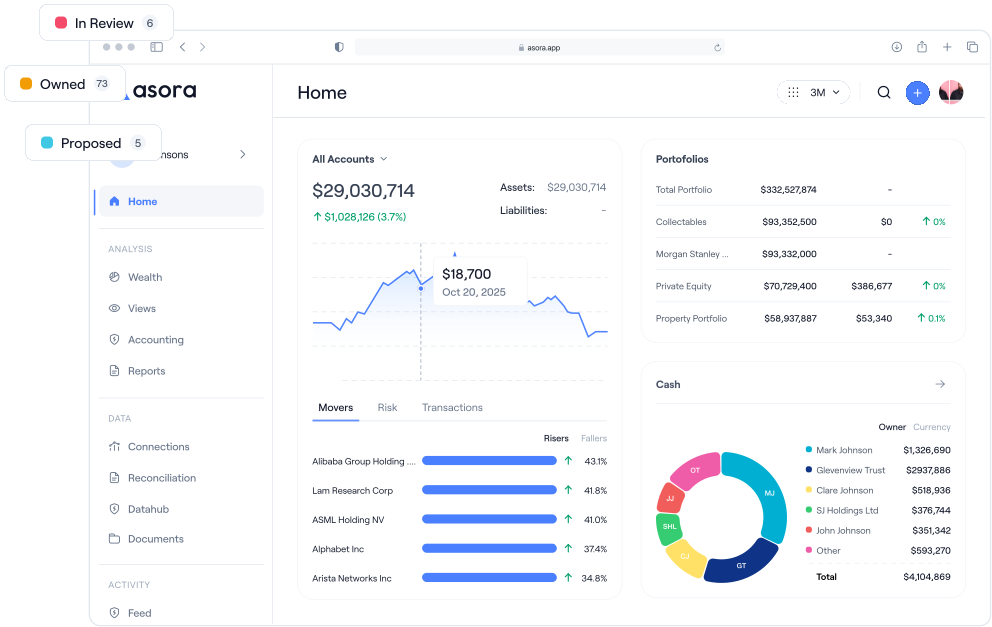
Asora replaces manual processes with structured dashboards, automated reports, and standardised financial insights. By automating data aggregation and streamlining workflows, Asora enables family offices to generate reports quickly and accurately.
Comprehensive Alternative Investments Tracking
- Captures all relevant data points for hedge funds, PE funds, real estate, and direct investments.
- Supports complex ownership structures, ensuring a consolidated view of private holdings.
Performance Metrics
- Tracks commitments, capital calls, and distributions.
- Calculates key private asset metrics, including IRR and multiples, unrealised/realised gains/losses without manual effort.
- Standardises valuation methodologies, ensuring consistency across reports.
Structured Reporting & Insights
- Provides dynamic dashboards to monitor performance and track commitments over time.
- Enables reports in multiple formats for internal and external stakeholders.
Task Management
- Keeps track of outstanding actions on existing deals/pipelines.
- Stores notes within object cards for structured tracking.
- Manages status of pending deals and private assets.
Pipeline Tracking
- Asora's pipeline dashboard allows family offices to track assets from the early due diligence phase for a holistic look into deal stages.
- It centralises key deal information before an asset is funded.
- The structured review process provides clear visibility into investment decisions.
- Users can define their own pipeline stages and track their deals on those basis.
Alternative investments tracking for family offices
Traditional methods make tracking private assets inefficient, leading to inconsistent valuations and fragmented data. Asora simplifies private asset tracking with structured dashboards, automated valuations, and seamless reporting, helping family offices gain real-time insights and make informed investment decisions.
.png)
 ISO 27001 Certified
 GDPR Compliant