.png)
TL;DR
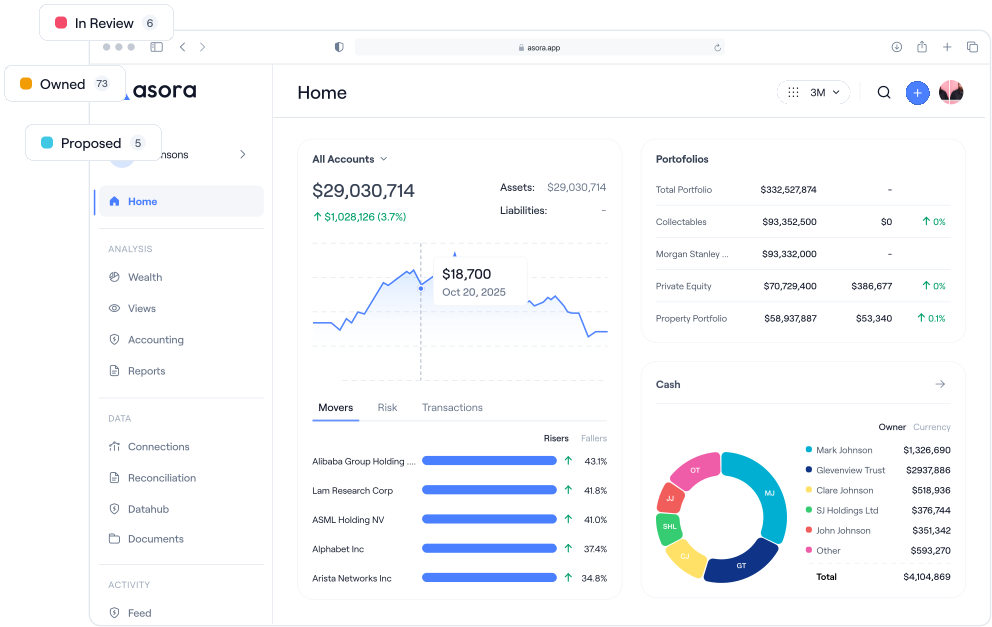
Multi-family office (MFO) software has become non-negotiable for MFOs managing complex portfolios across multiple clients and jurisdictions. The right platform automates data aggregation, streamlines operations, enables consolidated reporting, and provides role-based access for different family members and advisors. This guide reviews 8 leading multi-family office software platforms, comparing features like alternative asset tracking, performance reporting, and workflow automation.
Introduction
Running a multi-family office in 2026 means juggling an increasingly complex web of responsibilities. You're managing portfolios for multiple ultra-high-net-worth families, each with their own investment preferences, risk tolerances, and reporting requirements. Add in global compliance needs, alternative investments, and the growing demand for real-time transparency, and it becomes clear why Excel spreadsheets and manual processes simply don't cut it anymore.
The software you choose doesn't just impact operational efficiency. It shapes client satisfaction, determines how quickly you can respond to market opportunities, and influences whether your team spends time on strategic activities or administrative busywork. Modern family offices are increasingly recognizing that the right technology platform isn't just a nice-to-have; it's fundamental to delivering the level of service that today's wealthy families expect.
This guide cuts through the noise to explain what multi-family office software actually does, which features matter most for MFO operations, and how the leading platforms stack up against each other.
What Is Multi-Family Office Software?
Multi-family office software serves as the operational backbone for firms managing wealth across multiple family clients. Unlike generic wealth management tools designed for individual advisors or single-family offices focused on one family's needs, MFO platforms are purpose-built to handle the complexity that comes with serving multiple ultra-high-net-worth families simultaneously.
This software category addresses three fundamental challenges that multi-family offices face daily.
- Provides centralized data aggregation across dozens or hundreds of accounts, custodians, and asset types for multiple client families.
- Enables customizable, client-ready reporting that can be tailored to each family's preferences while maintaining operational efficiency.
- Offers robust access controls and workflow management to guarantee the right information reaches the right people while maintaining strict confidentiality between client families.
What sets family office software apart from traditional wealth management platforms is its ability to maintain clear separation between client data while still providing operational efficiency through shared infrastructure. Modern MFO platforms are great at handling alternative assets like private equity, real estate, and direct investments alongside traditional asset classes. They also provide advanced role-based permissions, allowing family members, advisors, and staff to access only the information relevant to their needs.
The best multi-family office management software goes beyond basic portfolio management to support the full spectrum of MFO operations. This includes document management, workflow automation, deal pipeline tracking, and required integrations.
The goal isn't just to replace spreadsheets, though. It's to create a unified operating system that makes complex wealth management feel effortless for both MFO staff and their client families (all to make more informed investment decisions).
Key Features MFOs Should Prioritise
When evaluating multi-family office software, certain capabilities matter more than others for operational success. The features that separate truly effective platforms from basic portfolio management tools typically fall into six critical categories.
- Multi-Client, Multi-Entity Data Aggregation: The foundation of any effective MFO platform is its ability to automatically gather and organize financial data from hundreds of sources while maintaining strict separation between client families. The best platforms excel at automating data capture from both liquid and illiquid sources, reducing manual work that typically consumes MFO operations teams.
- Alternative and Private Asset Tracking: Traditional wealth management software often treats alternative investments as afterthoughts, requiring manual workarounds that defeat automation benefits. The right family office software should handle private equity, hedge fund investments, real estate holdings, and direct deals with the same sophistication as public securities.
- Role-Based Access and Permissions: Multi-family offices must maintain strict confidentiality between client families while enabling efficient operations. This requires granular permission systems that can control access down to specific accounts, entities, or even individual assets, with audit trails for compliance and governance.
- Workflow Support and Integrations: Family office operations involve much more than investment tracking. Effective platforms support the full range of operational workflows, from document management and task tracking to integration with accounting systems and CRM platforms, reducing the need for multiple software solution providers.
- Scalable Onboarding and Support: Multi-family offices often grow by adding new client families or expanding services to existing clients. The right platform should make it straightforward to onboard new families without requiring extensive IT resources or lengthy implementation periods.
8 Recommended Multi-Family Office Software Platforms for 2026
1. Asora (Editor's Choice)
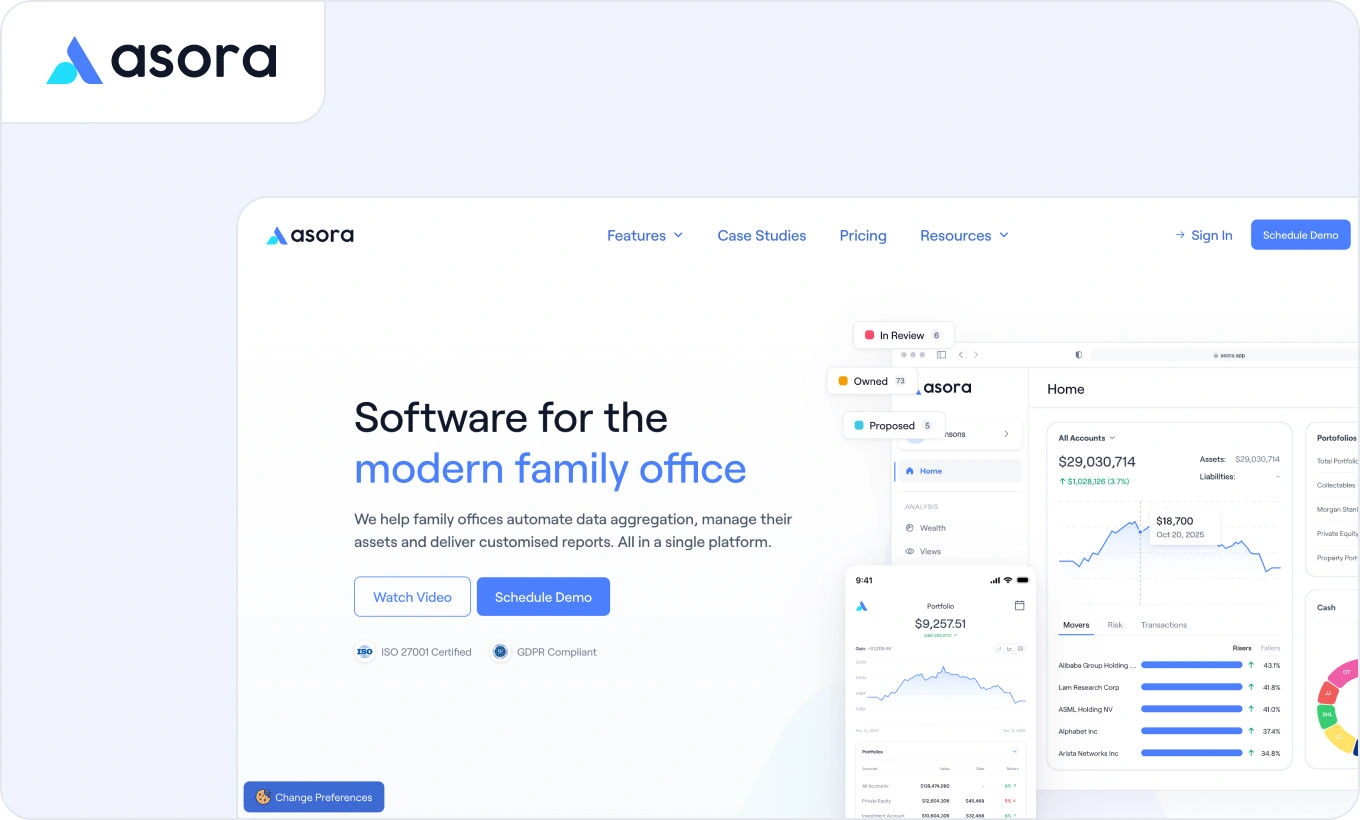
Asora delivers comprehensive functionality without the enterprise complexity that bogs down other platforms. It's multi-family office software built for single and multi-family offices managing $30M-$1B+ in assets that want to modernize their operations, especially those with significant alternative investments and complex entity structures. Asora focuses on automation that reduces manual efforts, interfaces that make sense, and implementation that doesn't drag on for months.
Features:
- Automated data aggregation across banks, custodians, and alternative investments
- Real-time performance monitoring with customizable reports
- Comprehensive alternative asset tracking including private equity and real estate
- Wealth Map with look-through visibility across complex ownership structures
- Workflow support with tasks and deal pipeline tracking
- Secure document management with granular access controls
- Native mobile applications for iOS and Android
- Intuitive interface designed for family members and wealth advisors
Pricing: Starting at $900/month, scaling with complexity rather than penalizing portfolio growth.
2. Landytech
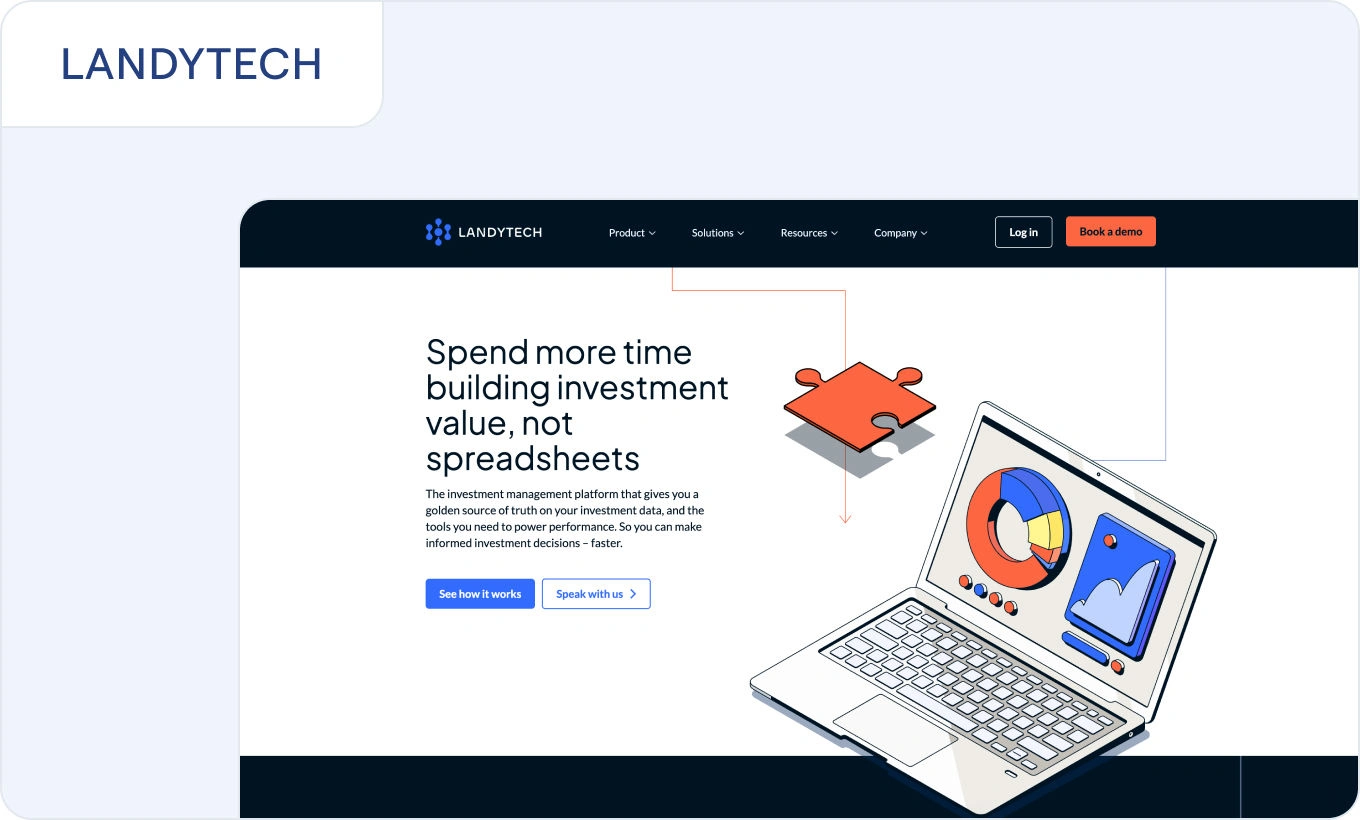
Landytech serves family offices operating across multiple jurisdictions, with wealth management software designed specifically for European investment operations. The platform specializes in regulatory complexity and multi-jurisdictional reporting designed to address complex regulatory requirements across markets.
Features:
- Multi-jurisdictional wealth consolidation with comprehensive regulatory compliance
- Cross-border reporting for international structures
- Multi-currency investment tracking and performance monitoring capabilities
- European banking system integrations with strong custodian connections
- Risk management tools specifically designed for international portfolios
- Secure document management with European privacy standard compliance
3. Masttro
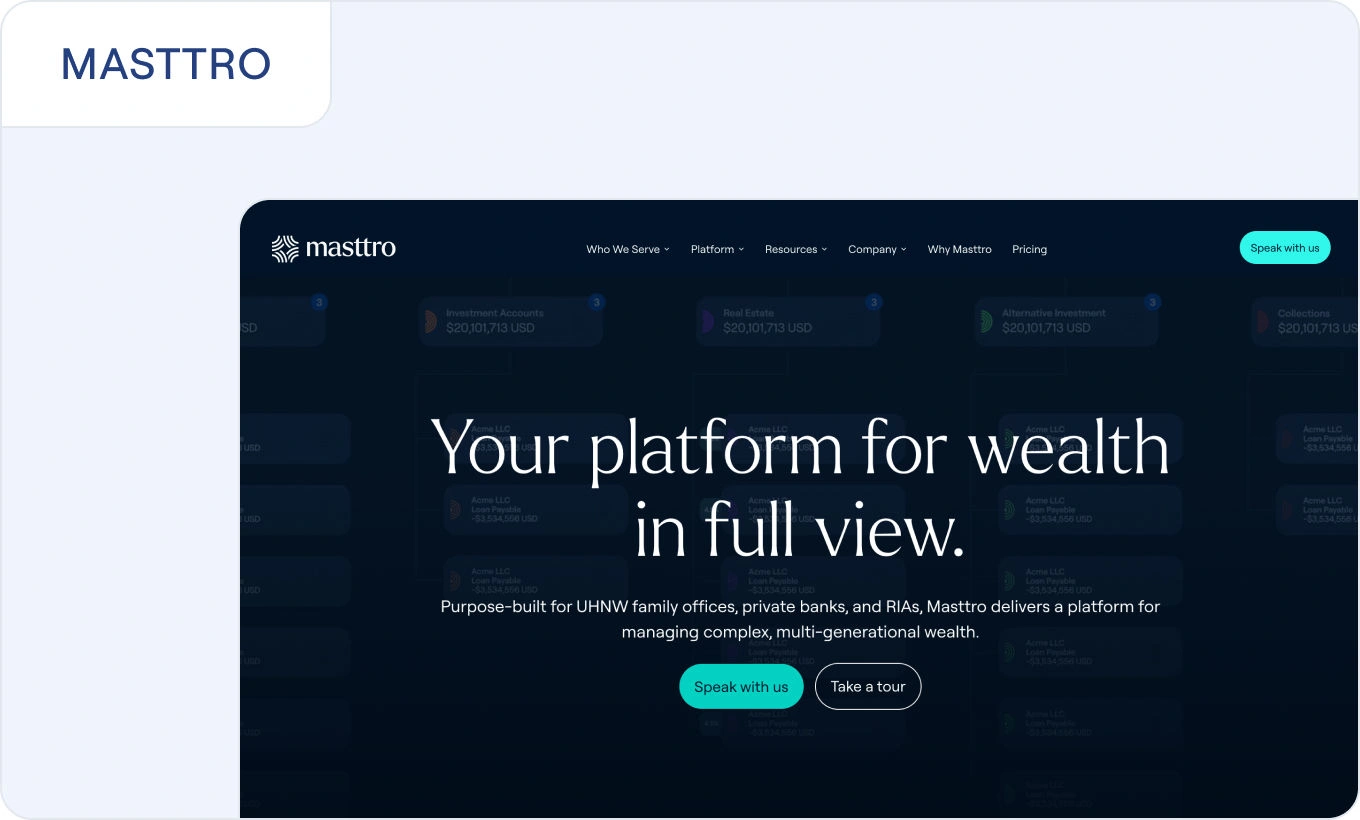
Masttro caters to family offices that need comprehensive wealth management with global reach and advanced reporting capabilities. The platform fits established multi-family offices that require detailed wealth mapping and secure collaboration tools for complex international structures.
Features:
- Global wealth consolidation with comprehensive multi-entity performance reporting
- Advanced wealth mapping visualization tools for complex ownership structures
- Secure document sharing and collaboration capabilities for family members and advisor teams
- Multi-currency investment tracking with predictive analytics and benchmarking
- Alternative investment management with document processing and workflow automation
- Customizable reporting and dashboard creation for different stakeholder needs
4. FundCount
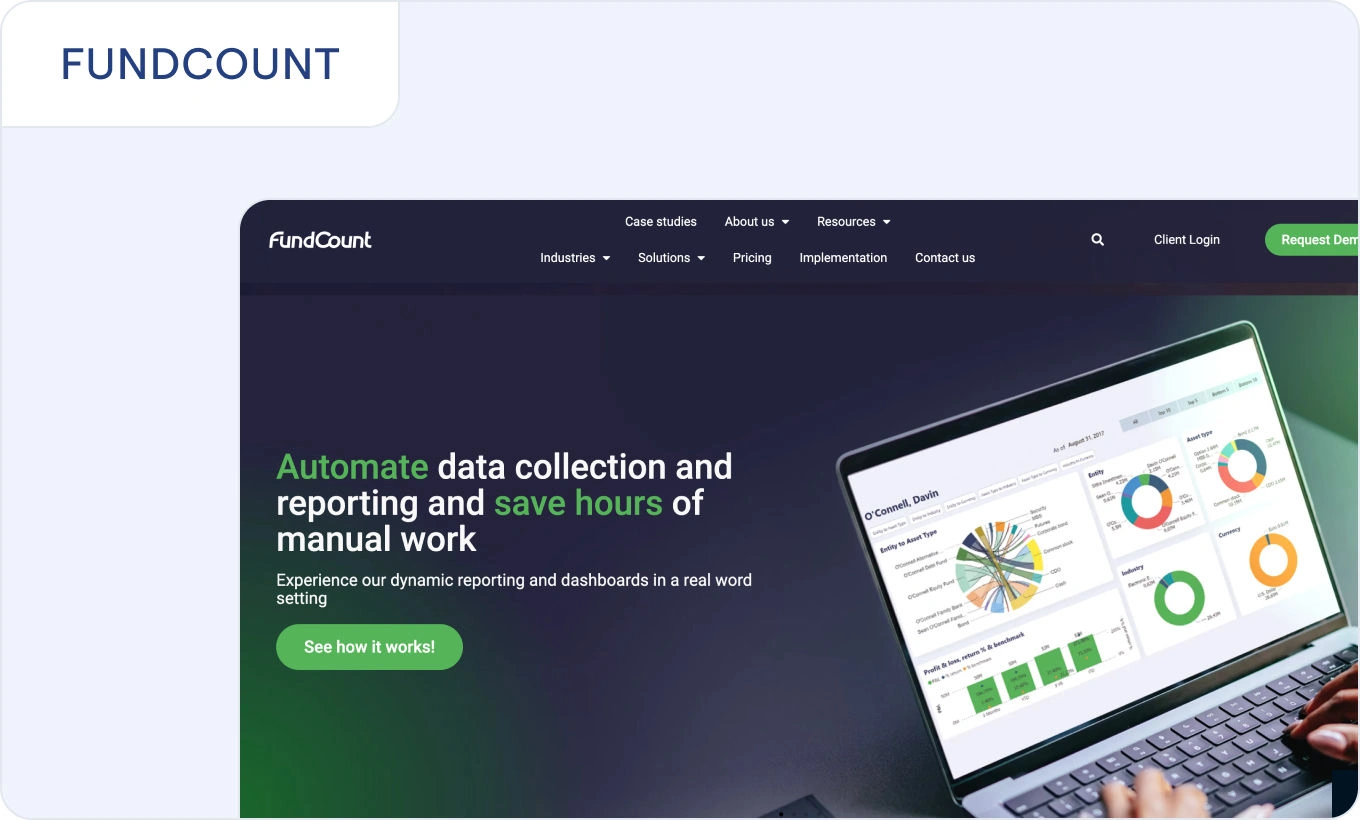
FundCount specializes in hedge funds and alternative investments, making it a strong choice for multi-family offices with significant exposure to complex investment structures and sophisticated accounting requirements.
Features:
- Advanced partnership accounting for complex fund structures
- Sophisticated performance reporting specifically designed for alternatives
- Comprehensive investor reporting and communication capabilities
- Strong support for private equity and hedge funds accounting
- Multi-currency support for international investments
5. Black Diamond (SS&C)
.webp)
Black Diamond by SS&C provides a comprehensive portfolio management and reporting solution. It offers a strong balance of functionality, scalability, and reliability, making it well-suited for firms that need advanced portfolio oversight and client communication tools within a single environment.
Features:
- Core portfolio management and performance reporting capabilities
- Client reporting tools with customizable templates
- Basic document management and communication features
- Integration with SS&C's broader ecosystem of financial management tools
- Risk management and compliance monitoring
- Mobile access for financial advisors and clients
6. Copia Wealth Studios

Copia focuses on providing integrated platform solutions for wealth advisors and multi-family offices seeking comprehensive wealth management capabilities with strong client service features.
Features:
- Portfolio management with performance tracking and analysis
- Specialized scheduling and forecasting tools for capital calls and cash management
- Financial planning integration for holistic wealth management
- Customizable reporting and dashboard creation
- Document storage and sharing capabilities
- Advisor-client collaboration tools
7. Private Wealth Systems
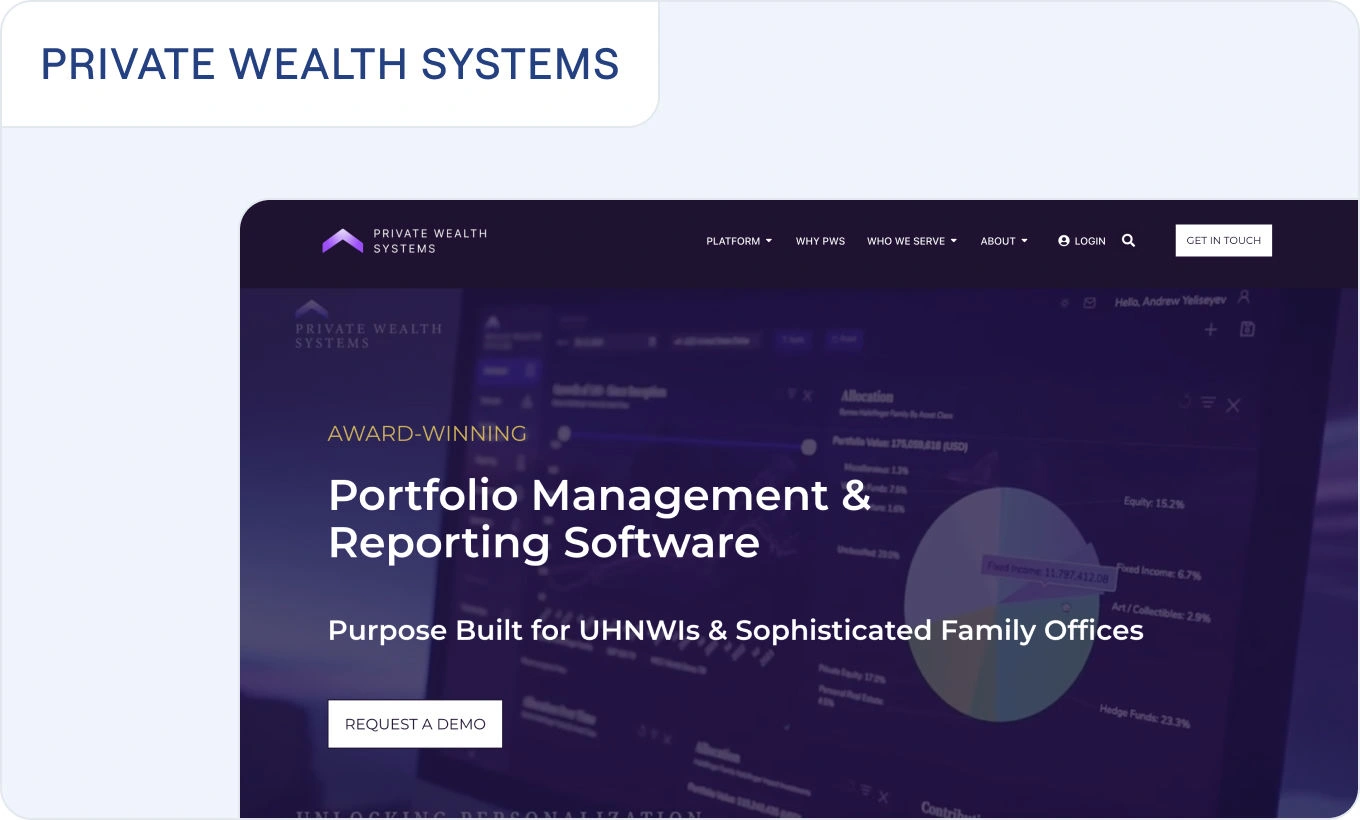
Private Wealth Systems specializes in family office software with particular emphasis on private assets tracking and complex reporting requirements for sophisticated wealth management operations.
Features:
- Comprehensive private assets tracking and valuation management
- Advanced partnership accounting for complex entity structures
- Detailed analytics and performance measurement
- Custom reporting capabilities for complex family structures
- Document management with secure access controls
8. QPLIX

QPLIX provides analytics and portfolio management tools with focus on institutional-grade capabilities for sophisticated asset managers and family offices requiring advanced analytical capabilities.
Features:
- Advanced analytics and quantitative analysis tools
- Comprehensive risk management and monitoring capabilities
- Sophisticated performance reporting with attribution analysis
- Multi-asset class support including alternative investments
- Customizable dashboards and reporting interfaces
- Integration capabilities with various investment data sources
How to Choose the Right Multi-Family Office Software in 2026
Selecting the right multi-family office software requires matching platform capabilities to your specific operational needs, client expectations, and growth plans. The decision impacts everything from daily workflows to client service quality, so it's worth taking a systematic approach to evaluation.
- Assess Your Current Pain Points: Start by honestly evaluating your challenges and future requirements. Are you drowning in manual data entry and consolidated reporting tasks? Do family members expect mobile access and real-time updates? Understanding these pain points helps prioritize which platform features matter most for your situation.
- Evaluate Multi-Client Capabilities: Multi-family offices must ensure the platform handles multiple client families while maintaining strict investment data separation. The wrong choice can create compliance headaches and operational inefficiencies that plague your firm for years.
- Consider Scalability and Growth: Can the system grow with your business as you add new families or expand service offerings? Platforms that require major overhauls every few years create unnecessary disruption and cost.
- Review Alternative Investment Support: If your clients hold significant positions in private equity, real estate, or direct investments, ensure the platform handles these asset classes with the same sophistication as public securities. Many wealth management platforms treat alternative investments as afterthoughts, forcing workarounds that defeat automation benefits.
- Assess Vendor Expertise: Evaluate the vendor's understanding of family office operations beyond basic investment management. The best family office software vendors offer implementation methodologies proven with other family offices and demonstrate knowledge of regulatory requirements and industry best practices.
- Calculate Total Cost of Ownership: Consider costs beyond initial licensing fees, including implementation, ongoing support, training requirements, and integration expenses. The cheapest option upfront often becomes the most expensive when you factor in customization needs and the opportunity cost of poor user adoption.
Real-World Outcomes
Omnia Capital Partners
Omnia Capital Partners, a multi-family office based in Sydney, faced typical challenges managing multiple asset classes and currencies across diverse client families. Before implementing family office software, their team spent weeks manually collecting and manipulating financial data from various sources to create static PDF reports that were often outdated by the time they reached clients.
The transformation with Asora automated investment data aggregation across custodians and alternative investments, providing real-time visibility into client portfolios. Omnia reduced files sent through email by over 50% while improving client service through secure, on-demand access to current portfolio data. Family members gained mobile access to their investment portfolio information, improving engagement and reducing routine inquiries to the operations team.
The security improvements proved equally important. Moving from email-based document management to Asora's encrypted vault eliminated cybersecurity risks while providing audit trails for compliance purposes.
Capstone Family Office
Capstone Family Office exemplifies how the right platform choice enables rapid scaling for growing multi-family offices. Founded in 2024, Capstone needed technology that could support their expansion across Scotland and the UK without requiring extensive IT infrastructure or specialized technical staff.
The firm's experience demonstrates the power of automation in family office operations. What previously required days of manual consolidated reporting work now takes less than 10 minutes. This efficiency gain freed up time for strategic family wealth management activities and improved service through faster response times and more dynamic client meetings.
Capstone's Wealth Map usage illustrates how visualization tools transform complex financial data into accessible insights for families and advisors. The ability to instantly display asset allocation across individuals, trusts, and companies improved governance discussions and made family meetings more productive and engaging.
Conclusion: Modernizing Your Family Office
The right platform choice represents a strategic investment that impacts everything from daily operational efficiency to long-term competitive positioning.
MFOs face an increasingly complex environment where family members expect transparency, investments require sophisticated tracking, and regulatory requirements demand detailed audit trails. Manual processes and generic management tools simply cannot keep pace with these demands while maintaining the operational efficiency necessary for profitable growth.
Among the platforms reviewed, Asora offers the optimal balance of automation, client focus, and operational efficiency for modern family offices. Purpose-built for family office operations, Asora provides the comprehensive functionality MFOs need without the complexity and cost associated with enterprise platforms designed for different use cases.
The transformation potential is significant. Family offices implementing modern platforms typically see dramatic improvements in reporting operations, reduced data entry requirements, and enhanced service capabilities. More importantly, these improvements free up family office professionals to focus on the strategic management activities that truly add value for client families.
The question isn't whether your MFO needs modern software—it's which platform will best position your firm for the next decade of growth and excellence.
Request a demo of Asora to see how purpose-built family office software can automate your workflows, improve service, and position your firm for scalable growth.
FAQs
What is multi-family office software?
Multi-family office software is specialized technology designed to help MFOs manage operations for multiple ultra-high-net-worth families simultaneously. These platforms provide comprehensive data aggregation, portfolio management, and client reporting capabilities while maintaining strict separation between client families.
How is MFO software different from SFO platforms?
While single family offices can often succeed with simpler tools focused on one family's needs, multi-family offices require platforms that can handle multiple client relationships simultaneously. MFO software provides sophisticated user permission systems and operational workflows designed for serving multiple families efficiently while maintaining strict financial data separation.
Can these platforms handle private equity, real estate, and direct deals?
Yes, the best platforms provide comprehensive alternative investments tracking alongside traditional securities. This includes private equity fund monitoring with capital call tracking, real estate portfolio management, and direct investment oversight with performance analytics and compliance reporting.
What are the security and data protection features in multi-family office software?
Modern family offices require enterprise-grade security features including end-to-end encryption, two-factor authentication, and comprehensive audit trails. The best platforms provide granular user permission systems that allow family members and advisors to access only relevant information while maintaining strict confidentiality between client families.
Automate your family office today
FAQ
How is MFO software different from SFO platforms?
While single family offices can often succeed with simpler tools focused on one family’s needs, multi-family offices require platforms that can handle multiple client relationships simultaneously. MFO software provides sophisticated user permission systems and operational workflows designed for serving multiple families efficiently while maintaining strict financial data separation.
Can these platforms handle private equity, real estate, and direct deals?
Yes, the best platforms provide comprehensive alternative investments tracking alongside traditional securities. This includes private equity fund monitoring with capital call tracking, real estate portfolio management, and direct investment oversight with performance analytics and compliance reporting.
What are the security and data protection features in multi-family office software?
Modern family offices require enterprise-grade security features including end-to-end encryption, two-factor authentication, and comprehensive audit trails. The best platforms provide granular user permission systems that allow family members and advisors to access only relevant information while maintaining strict confidentiality between client families.
 ISO 27001 Certified
 GDPR Compliant